A furniture showroom in Baghdad runs a successful Instagram campaign. Over one weekend, 140 people send WhatsApp messages asking about prices and delivery. The sales team answers the first 60 on Saturday, a few more on Sunday, and by Monday most of the remaining enquiries have gone cold or bought elsewhere. Nobody follows up with the people who asked for a quote and went quiet. The campaign worked; the process after it did not. That gap is exactly what marketing automation is designed to close.
This guide explains marketing automation for Iraqi businesses in practical terms. It covers what automation really means, which workflows deliver results first, how WhatsApp, email, and SMS fit together, how to choose tools without overspending, the data and consent basics, and a 30-day plan you can start with this month. It focuses on cross-channel workflows; if you only need email flows for an online store, our guide to email marketing automation goes deeper on that.
What Marketing Automation Is?
Marketing automation means using software to carry out repetitive marketing tasks automatically, based on rules or customer actions. Instead of a person remembering to send a follow-up, the system sends it when a trigger happens. That simple shift is the core of marketing automation.
Triggers, Actions, and Conditions
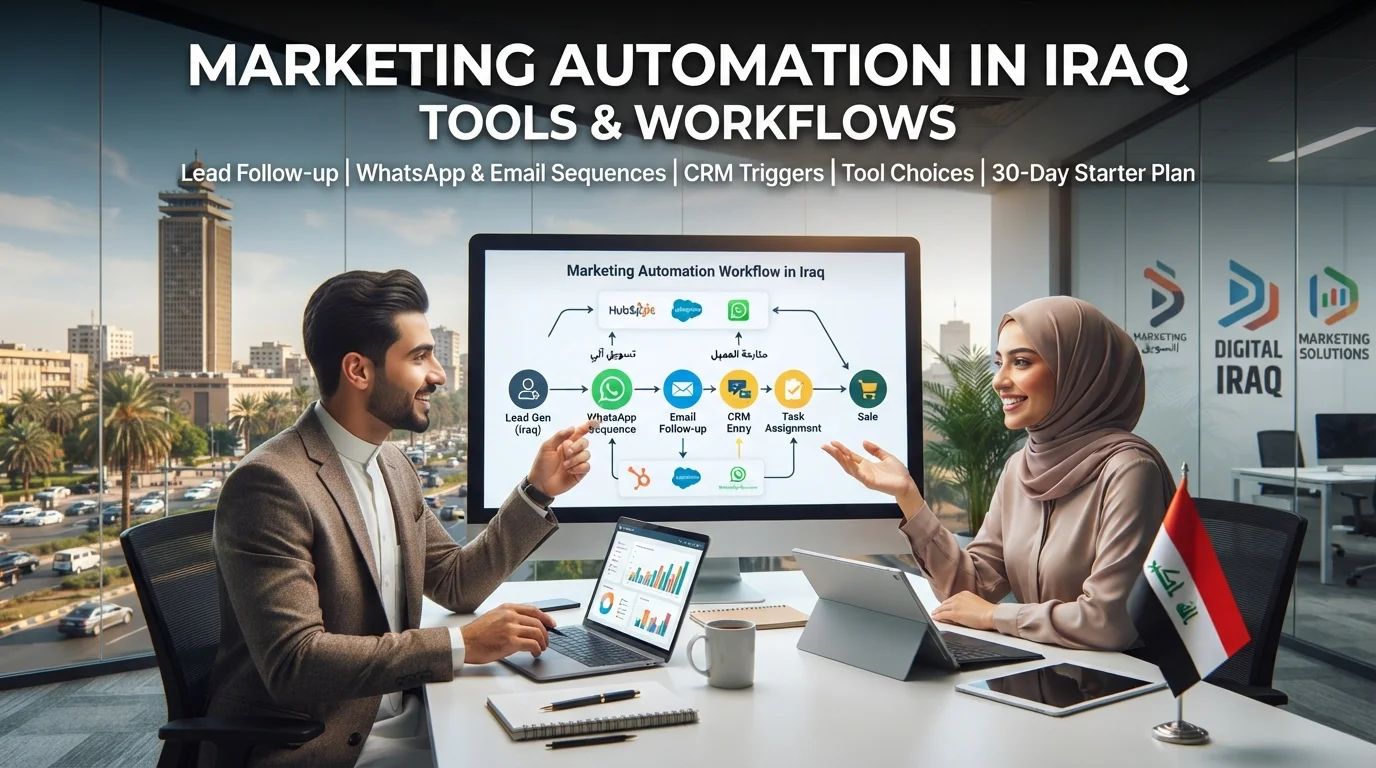
Every marketing automation workflow has three parts. A trigger starts it, such as a form submission, a new WhatsApp lead, an abandoned cart, or a purchase. Actions are what happens next, such as sending a message, adding a tag, assigning a lead to a salesperson, or creating a task. Conditions decide which path a contact follows, for example whether they replied, which product they asked about, or which city they are in.
What Automation Is Not?
Marketing automation is not mass messaging everyone in your contact list, and it is not a chatbot that pretends to be human. Good automation sends the right message to the right person at the right time, and hands the conversation to a person when it matters. Done badly, marketing automation becomes spam that damages your brand and your sender reputation.
Why It Matters for Iraqi Businesses?
In Iraq, many enquiries arrive through WhatsApp and social media, often in bursts after campaigns, holidays, or Ramadan offers. Small teams cannot always respond quickly or follow up consistently, which is why marketing automation pays off quickly here. Automation does not replace those teams; it makes sure nothing falls through the cracks between conversations.
Five Workflows Worth Automating First
You do not need dozens of workflows. These five deliver value for most Iraqi businesses.
1. Instant Lead Acknowledgment
When someone submits a form or sends a first message, an immediate reply confirms you received it, sets expectations for response time, and asks one useful question, such as which product or service they need. This simple marketing automation workflow alone reduces the number of leads who give up waiting.
2. Lead Assignment and Reminders
New leads are automatically assigned to the right salesperson based on service, city, or language, and the system creates a reminder if nobody responds within a set time. This is one of the most practical forms of marketing automation for teams that lose track of enquiries.
3. Quote Follow-Up
When a quote is sent and the customer goes quiet, an automated follow-up two or three days later checks whether they have questions. A second, final follow-up a week later closes the loop. Many sales are won by the business that simply followed up, and marketing automation makes sure that happens every time.
4. Post-Purchase and Review Requests
After a purchase or completed service, an automated message thanks the customer, shares useful information, and later asks for a review. This supports your reputation work, as explained in our guide to online reviews and reputation management.
5. Re-Engagement of Past Customers
Customers who bought months ago can receive a relevant offer, a reminder about a service renewal, or a seasonal message before Ramadan or Eid. Keep these marketing automation messages occasional and relevant so they feel helpful rather than intrusive.
Email, WhatsApp, and SMS: Choosing the Right Channel
Effective marketing automation in Iraq is usually cross-channel. Each channel has a different role.
WhatsApp for Conversations
WhatsApp is where many Iraqi customers already talk to businesses. It suits acknowledgments, order confirmations, appointment reminders, and quote follow-ups. Automated WhatsApp messaging at scale typically requires the WhatsApp Business Platform through an approved provider, with message templates approved by Meta for many outbound messages and Meta’s pricing applying. Our guide to WhatsApp Business for Iraqi companies explains the difference between the app and the platform.
Email for Longer Relationships
Email works well for detailed information, newsletters, onboarding sequences, B2B communication, and documents such as quotes and invoices. It is also cheaper per message for larger lists. For email to reach inboxes, your domain must be authenticated properly, as covered in our guide to business email on your own domain.
SMS for Short, Urgent Notices
SMS can be useful for short, time-sensitive messages such as delivery updates or verification codes, especially for customers who do not use WhatsApp. It is less suited to rich content or two-way conversations.
Combine Channels Thoughtfully
A typical workflow might send an instant WhatsApp acknowledgment, email a detailed quote, and send a WhatsApp follow-up if the customer does not respond. Avoid sending the same message on every channel at once; that feels like pressure, not service.
Choosing Marketing Automation Tools
The right marketing automation tool depends on your size, channels, and existing systems. There is no single best platform.
Start With What You Already Have
Many businesses already own tools with automation features: email marketing platforms with automated sequences, ecommerce platforms with abandoned-cart flows, CRMs with task automation, and the WhatsApp Business app with greeting and away messages. Use these first before buying a new marketing automation platform.
Types of Tools to Consider
The main categories are email marketing platforms with automation, CRMs with built-in workflows, WhatsApp Business Platform providers, all-in-one marketing suites, and connector tools that link different apps together. Small businesses often combine a CRM, an email tool, and a WhatsApp provider; larger organizations may choose an all-in-one suite.
Questions to Ask Before Choosing
Ask whether the tool supports Arabic properly, including right-to-left templates; whether it integrates with your website, store, and WhatsApp; how pricing scales with contacts or messages; where data is stored; and whether support is available in your working hours. Check current pricing directly with each provider, because plans change often.
Avoid Over-Buying Marketing Automation Software
Many companies pay for advanced marketing automation suites and use only a fraction of their features. Start with a tool that covers your first five workflows well, and upgrade only when you have outgrown it.
Data and Consent Basics
Automation amplifies whatever data and habits you already have, good or bad, so marketing automation starts with clean data.
Clean, Organized Contact Data
Workflows depend on accurate data: names, phone numbers in a consistent format, email addresses, language preference, city, and the product or service of interest. Messy data produces wrong messages to the wrong people. Clean your contact list before switching on any marketing automation workflow.
Get Permission and Respect Opt-Outs
Only send automated marketing messages to people who have agreed to receive them or have an existing relationship with you, and make unsubscribing or opting out easy. Messaging platforms have their own rules on consent and message types, and violating them can lead to restrictions on your account. Treat permission as a business asset, not a formality.
Protect Customer Information
Limit who can access customer data, use secure tools, and avoid exporting contact lists into personal spreadsheets or phones. Customers trust you with their information; automation should not weaken that trust.
Measuring Marketing Automation Results
Any marketing automation setup is only worth it if it improves results you can see.
Metrics That Matter
Track response time to new leads, the share of leads that receive follow-up, quote-to-sale conversion, repeat purchase rate, and unsubscribe or opt-out rates. These show whether marketing automation is helping customers move forward or simply sending more messages.
Connect Automation to Your Analytics
Make sure enquiries from your website are tracked properly so you can see which campaigns feed your automated workflows. Our guide to GA4 lead tracking for Iraqi businesses explains how to measure WhatsApp clicks, calls, and forms.
Review and Refine Monthly
Look at each marketing automation workflow once a month. Which messages get replies? Where do customers drop off? Adjust timing, wording, and conditions based on what the data shows.
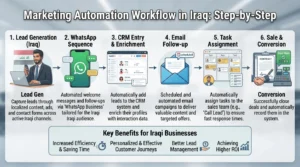
Marketing Automation in Iraq: Tools & Workflows
A 30-Day Marketing Automation Starter Plan
Here is a realistic plan for a small or mid-sized Iraqi business:
- Week 1: Clean your contact data, list your lead sources, and set up instant acknowledgment messages for forms and WhatsApp.
- Week 2: Set up lead assignment rules and reminders so every enquiry has an owner and a response deadline.
- Week 3: Build a two-step quote follow-up and a post-purchase thank-you with a review request.
- Week 4: Measure response times and conversions, fix what is not working, and plan your next workflow.
This plan focuses on speed and follow-up, which is where most Iraqi businesses lose sales. Once these basics run smoothly, you can expand marketing automation to re-engagement campaigns, segmentation by product or city, and seasonal sequences.
Common Marketing Automation Mistakes
A few mistakes appear again and again:
- Automating messages before cleaning contact data.
- Sending too many messages, too often, on too many channels.
- Using robotic, translated Arabic that feels impersonal.
- Forgetting to hand conversations to a real person when customers need help.
Avoiding these keeps automation working for you rather than against you.
Frequently Asked Questions About Marketing Automation
Is marketing automation only for large companies?
No. Small businesses often benefit most, because automation helps a small team respond quickly and follow up consistently without hiring more staff.
Can I automate WhatsApp messages?
Yes, within limits. The WhatsApp Business app offers basic automated greetings and away messages. Larger-scale automation usually requires the WhatsApp Business Platform through an approved provider, with Meta’s rules and pricing applying.
Will automation make my business feel impersonal?
Only if it is done badly. Short, helpful, well-timed messages in natural Arabic or English, with an easy way to reach a person, usually make customers feel better served.
How long does it take to see results?
Simple workflows such as instant acknowledgments and quote follow-ups can show results within weeks, especially in response times and conversion rates.
Automate the Follow-Up, Keep the Human Touch
Marketing automation helps Iraqi businesses respond faster, follow up consistently, and keep customers engaged without overwhelming their teams. Start with the basics: instant acknowledgment, lead assignment, quote follow-up, and post-purchase messages. Choose tools that fit your size and channels, respect consent, and measure what improves.
If you want help designing automation workflows across WhatsApp, email, and your CRM, Creative 4 All can review your current process and recommend where to begin. Explore our digital marketing services in Iraq, see our email marketing services, or request a consultation today.