A restaurant in Erbil had excellent food, steady regulars, and a 3.4-star rating on Google. The low score came from a handful of angry reviews written over two difficult months, a delivery problem, and a few complaints nobody ever answered. Meanwhile, hundreds of happy customers had never been asked to leave a review at all. New customers searching for dinner saw the rating, compared it with a 4.6-star competitor down the street, and chose the competitor. Nothing was wrong with the restaurant. Its reputation management was simply missing.
This guide explains reputation management for Iraqi businesses in practical terms: why reviews affect both rankings and sales, how to ask for genuine reviews the right way, how to respond in Arabic and English, how to deal with fake or unfair reviews, what Google prohibits, and how to look after your reputation beyond Google.
Why Reviews Shape Local Rankings and Sales?
For reputation management, it helps to remember that online reviews influence two things at once: whether customers see your business, and whether they choose it.
Reviews and Local Search Visibility
Google uses review signals, such as the number of reviews, their recency, and their overall rating, as part of how it ranks businesses in local results and Google Maps. Reviews are not the only factor, but a business with a steady flow of genuine reviews generally competes better than one with a few old ones. Our guide to local SEO in Iraq explains how reviews fit alongside other local ranking factors.
Reviews and Customer Decisions
Customers in Iraq, like customers everywhere, compare ratings before calling, visiting, or sending a WhatsApp message. They read recent reviews, look for patterns in complaints, and notice whether the business replies. A strong rating with thoughtful responses builds trust before the first conversation. That is why reputation management is not just a marketing task; it affects every enquiry.
Silence Is Also a Signal
A profile with unanswered complaints suggests a business that does not listen. A profile with very few reviews suggests a business that is new, small, or not popular, even when that is untrue. Both problems are fixable with a simple, consistent reputation management process.
Asking for Reviews the Right Way
The best reputation management strategy starts with making it easy for satisfied customers to share their experience.
Ask at the Right Moment
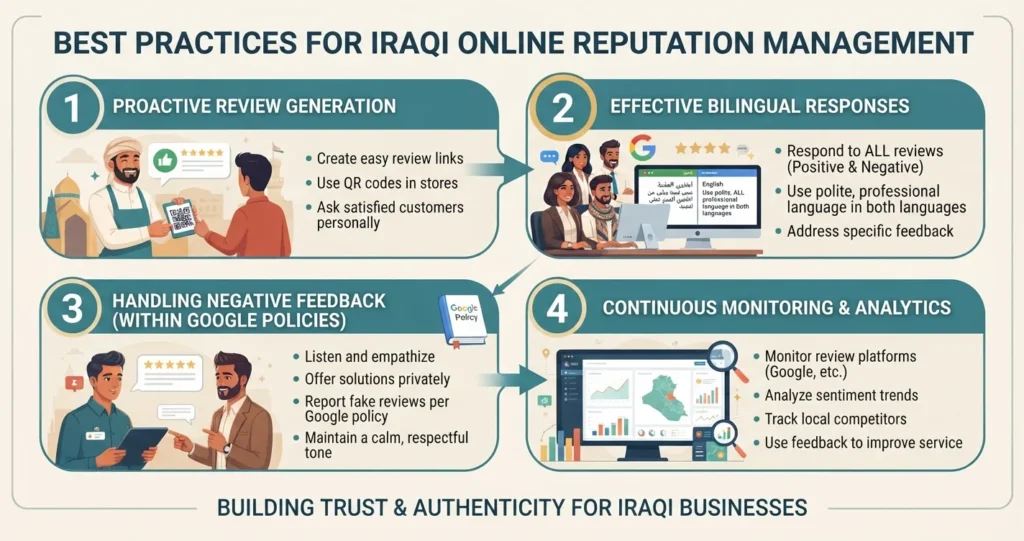
In practical reputation management, the best time to ask is right after a good experience: when a patient leaves a clinic satisfied, when a customer collects a finished order, or when a client thanks you for a completed project. A short, polite request at that moment works far better than a mass message weeks later.
Make It Effortless
Create a direct review link from your Google Business Profile and share it through WhatsApp, SMS, email, receipts, or a QR code at the counter. The fewer steps customers need, the more likely they are to follow through. If you have several branches, give each one its own link so reviews land on the correct location’s profile. Our guide to local SEO for multi-branch businesses explains why that matters.
Ask Everyone, Not Only Happy Customers
Google prohibits selectively asking only customers you expect to be happy, a practice known as review gating. Ask customers generally, and let them share their honest experience. Honest reputation management feels risky to some owners, but genuine mixed feedback is far more credible than a suspiciously perfect profile.
Never Offer Incentives
Do not offer discounts, gifts, or entries into prize draws in exchange for reviews, and never pay for reviews. Google’s policies prohibit incentivized reviews, and businesses caught doing it risk having reviews removed and their profiles restricted.
Responding to Reviews in Arabic and English
Responses are where reputation management becomes visible to everyone. Future customers read your replies as carefully as the reviews themselves.
Reply in the Customer’s Language
If a customer writes in Arabic, reply in Arabic. If they write in English, reply in English. Matching the language shows respect and makes the response feel personal. Keep the tone professional and warm, whether the review is positive or negative; tone is the heart of reputation management.
Thank Positive Reviewers Personally
In reputation management, a short, specific thank-you works better than a copied template. Mention what the customer appreciated, such as the service, the product, or the staff member they named, and invite them back. These replies show prospective customers that real people run the business.
Handle Negative Reviews Calmly
When a review is negative, respond promptly, acknowledge the customer’s experience, apologize where appropriate without arguing publicly, and offer a way to resolve the issue offline, such as a phone number or WhatsApp contact. Then follow up internally. A calm, constructive reply often impresses future customers more than a perfect rating would.
Avoid Common Response Mistakes
Do not blame the customer, reveal private details, or post the same generic reply to every review. Avoid long defensive explanations. For healthcare and other sensitive sectors, never confirm private information such as a patient’s treatment in a public reply.
Handling Fake or Unfair Reviews
Every business eventually receives a review that seems unfair. Some may even be fake. Good reputation management means responding wisely rather than emotionally.
Distinguish Unfair From Fake
An unfair review is still a real customer’s opinion, even if you disagree. A fake review comes from someone who was never a customer, a competitor, or a coordinated attack. Unfair reviews deserve a polite reply; fake reviews may also be reported.
Report Policy Violations
Google allows you to report reviews that violate its policies, such as spam, conflicts of interest, offensive language, or content unrelated to a real experience. Report through your Google Business Profile and keep records. Removal is not guaranteed, and reporting a review simply because it is negative will not work.
Respond Even While Reporting
While a report is being reviewed, a brief, professional public reply can reassure other readers, for example noting that you have no record of the customer and inviting them to contact you directly. Stay factual and calm; good reputation management never escalates.
Watch for Sudden Review Spikes
A sudden wave of one-star reviews in a short time, often without detail, may indicate coordinated activity. Document it, report it, and if necessary contact Google Business Profile support. Do not respond with fake positive reviews of your own; that only creates new violations.
What Google Prohibits?
Knowing the rules is part of reputation management and protects your profile and your brand. Google’s review policies prohibit several practices that some businesses still use.
Practices to Avoid
The main prohibited practices include:
- Writing fake reviews or asking staff, friends, or family to review your business.
- Offering incentives or payment in exchange for reviews.
- Review gating, meaning selectively asking only satisfied customers.
- Posting reviews about competitors, positive or negative.
Violations can lead to reviews being removed, review posting being restricted, or warnings shown on your profile. Effective reputation management stays inside these rules, because the risks far outweigh any short-term gain.
Do Not Buy Review Services
Some providers sell “review packages” promising dozens of five-star reviews. Avoid them. Fake reviews are often detected and removed, and the damage to trust when customers notice can be worse than a modest rating.
Reputation Beyond Google
Google is central, but your reputation in Iraq also lives on other platforms.
Facebook, Instagram, and TikTok
Many Iraqi customers share opinions in comments, recommendations, and posts on Facebook, Instagram, and TikTok. Include these channels in your reputation management: monitor them, reply to questions and complaints, and avoid deleting criticism unless it is abusive or spam. Deleting legitimate complaints often makes them louder. Our guide to social media marketing in Iraq covers how to manage these channels day to day.
WhatsApp Screenshots
In Iraq, complaints often spread as screenshots of WhatsApp conversations. The best protection is consistent, respectful communication in every chat, because any message can become public. Train staff to stay polite even under pressure, because everyday conversations are part of reputation management too.
Search Results for Your Brand Name
As part of reputation management, search your business name regularly and see what appears: your website, profiles, news articles, directory listings, and social posts. Strong, accurate profiles and helpful content give customers a balanced picture. Monitoring your brand search is a simple but often forgotten part of reputation management.
Reputation Management by Sector
The principles are the same everywhere, but reputation management looks slightly different depending on your industry.
Clinics and Healthcare
Patients read reviews carefully before booking, and complaints often concern waiting times or communication rather than treatment. In healthcare reputation management, never discuss medical details publicly; thank reviewers, invite them to contact the clinic privately, and fix scheduling or communication issues that keep reappearing.
Restaurants and Cafés
Reviews arrive quickly and in large numbers. Photos posted by customers matter as much as the text. Fast, friendly replies and visible fixes, such as improved delivery packaging, make reputation management in food and hospitality noticeably easier.
Retail and Ecommerce
Complaints usually concern delivery times, product quality, or returns. Clear policies on your website and fast responses on WhatsApp prevent many negative reviews before they are written.
Building a Simple Reputation Management Routine
In reputation management, consistency matters more than effort spikes. A short routine keeps your reputation healthy.
Weekly and Monthly Reputation Management Tasks
Each week, check new reviews and reply to all of them, including positive ones. Check social comments and messages for complaints. Each month, review rating trends by branch, identify recurring complaints, and share them with operations so problems are fixed at the source. Every quarter, review your process for asking customers and refresh review links and QR codes.
Turn Feedback Into Improvements
The most valuable part of reputation management is listening. If several reviews mention slow delivery, long waits, or unclear prices, fix the underlying issue. Better operations lead to better reviews naturally, which is far more sustainable than any marketing tactic.
Frequently Asked Questions About Reputation Management
Ask every customer at the right moment, make it easy with a direct link or QR code, and build the habit into daily operations. Avoid incentives and fake reviews, which violate Google’s policies.
No. Businesses cannot delete reviews. You can report reviews that violate Google’s policies, but legitimate negative reviews remain. The best response is a calm, helpful reply.
Yes, ideally. Replying to positive and negative reviews shows customers that you listen, and it gives prospective customers more confidence in your business.
No. Google is central, but Facebook, Instagram, TikTok, WhatsApp conversations, and search results for your brand name all shape how customers see you.
Protect the Reputation You Have Earned
Strong reputation management combines a steady flow of genuine reviews, thoughtful replies in Arabic and English, calm handling of unfair feedback, respect for Google’s policies, and attention to every channel where customers talk about you. Above all, it uses feedback to improve the business itself.
If your rating does not reflect the quality of your service, Creative 4 All can help you build a review process, respond professionally, and monitor your reputation across channels. Explore our SEO services in Iraq, read our Google Business Profile optimization guide, or see our social media marketing services.