

Iraq’s retail industry is projected to grow at a 6.7 percent compound annual rate between 2024 and 2030, according to market research firm 6Wresearch, with online distribution specifically identified as the fastest-growing channel within that broader growth. For retailers and entrepreneurs weighing whether to launch online, that combination — steady retail growth plus a disproportionately expanding digital channel — makes building an ecommerce website Iraq customers can actually use one of the more data-backed opportunities available right now, not a speculative bet on future demand.
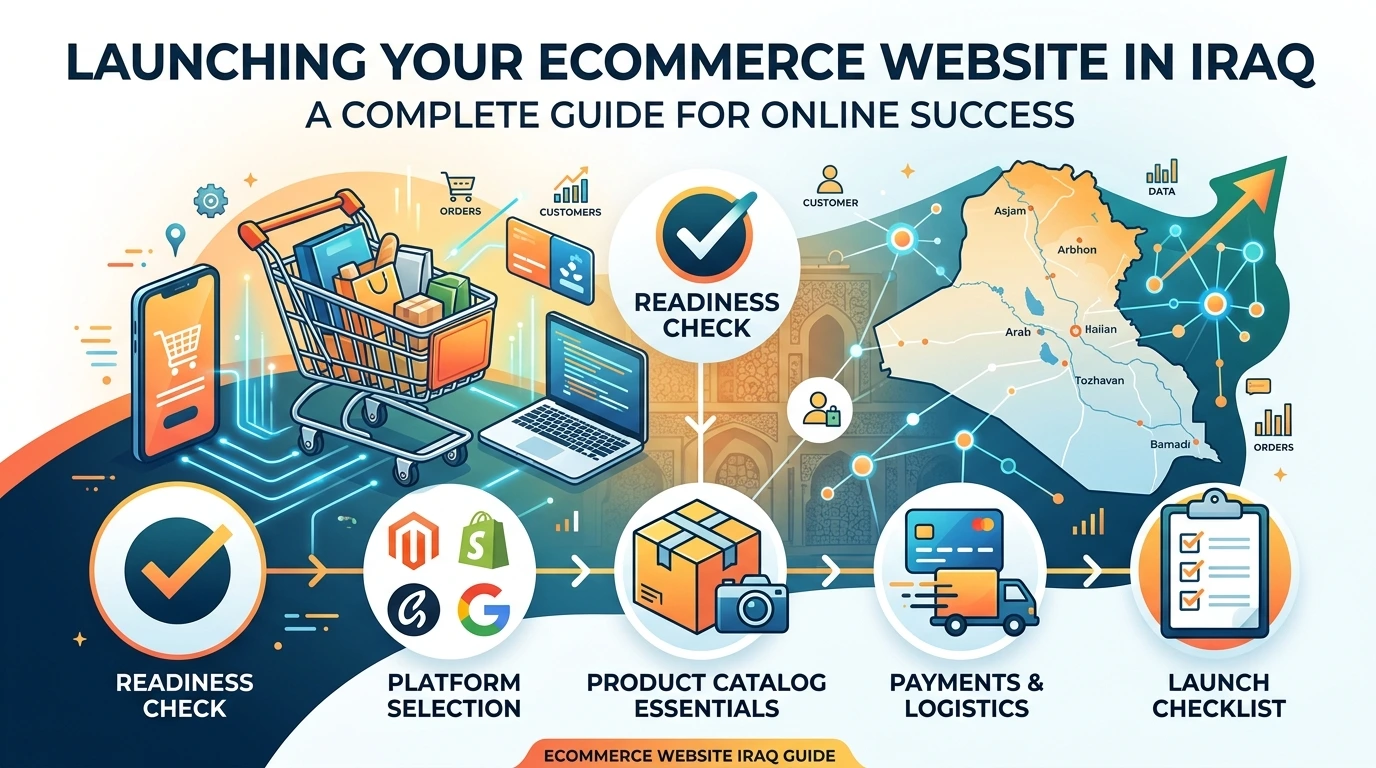
This guide walks through the practical decisions involved in actually launching an online store in Iraq: whether your business is genuinely ready for ecommerce, how to think about platform selection, the product catalog and checkout essentials that determine whether visitors actually complete a purchase, the payment and logistics realities specific to the Iraqi market, and a concrete launch checklist to work through before going live. Whether you’re a retailer expanding online or a new entrepreneur starting from scratch, this guide is built around the practical decisions that actually determine whether an online launch succeeds.
Is Your Business Ready for Ecommerce?
Product Fit for Online Sales
Some products sell online more readily than others — items that don’t require extensive in-person evaluation, that can be clearly photographed and described, and that ship reasonably well are naturally better suited to ecommerce than products relying heavily on in-person fitting, demonstration, or consultation. This doesn’t rule out harder-to-sell categories entirely, but it does mean the online sales approach may need to differ, often incorporating more detailed content or a hybrid online-to-in-store model.
Operational Readiness Beyond the Website
Launching online store Iraq customers can rely on requires more than a functional website — it requires inventory management capable of reflecting real-time stock accurately, a fulfillment process that can actually get products to customers reliably, and customer service capacity to handle inquiries and issues that inevitably arise once real transactions start happening. A beautifully built store connected to disorganized fulfillment creates a worse experience than no online store at all.
Realistic Expectations About Timeline and Effort
Ecommerce success rarely happens immediately after launch — building traffic, refining the customer experience based on real behavior, and establishing trust as a new online seller all take sustained effort over months, not days. Businesses expecting an online store to generate significant revenue within its first few weeks are typically setting themselves up for premature disappointment rather than giving the channel a fair chance to develop.
A Practical Example of Readiness Gaps
Consider an Iraqi home goods retailer that launched an attractive, well-designed online store, only to discover within weeks that its manual inventory tracking couldn’t keep pace with online orders — customers were completing purchases for items already sold in-store, leading to cancellations and frustrated first impressions. The website itself wasn’t the problem; the operational systems behind it hadn’t been built to support real-time ecommerce demand. Addressing this required implementing proper inventory synchronization before continuing to grow online traffic, a lesson that applies broadly: a genuinely ready ecommerce website Iraq business launches successfully depends as much on backend operations as on the storefront itself.
Platform Selection Overview
Standard Ecommerce Platforms
For most retailers, an established ecommerce platform — whether a dedicated ecommerce solution or a CMS like WordPress paired with WooCommerce — offers a proven, well-supported foundation without requiring custom development. These platforms handle the core functionality most stores need: product catalogs, cart and checkout flows, and integration with common payment methods.
When Custom Development Makes Sense?
Ecommerce development Iraq businesses pursue custom builds for typically involves unusual product configuration needs, complex pricing logic, or integration requirements that standard platforms don’t accommodate cleanly. For most retailers, however, a standard platform properly configured and well-designed delivers better value than custom development, since genuine custom-build needs are the exception rather than the norm.
Key Selection Criteria
Beyond raw functionality, platform selection should weigh available local developer support, how well the platform handles Arabic-English bilingual requirements if relevant, ongoing cost structure, and how easily the platform scales as a catalog grows from a handful of products to a much larger inventory.
Product Catalog & Checkout Essentials
Product Pages That Actually Convert
Each product needs a unique, detailed description addressing what an Iraqi shopper specifically wants to know — sizing relative to local expectations, delivery timelines, warranty details — rather than a generic manufacturer description duplicated across many other stores selling the same item. High-quality images from multiple angles, with fast-loading optimization for mobile networks, matter as much as the written content.
Streamlining the Checkout Process
Every additional step or required field in a checkout flow increases the chance a visitor abandons the purchase before completing it. Minimizing required information, offering guest checkout without forcing account creation, and clearly displaying total cost including any delivery charges before the final confirmation step all reduce abandonment.
A Quick Product & Checkout Checklist
- Unique product descriptions addressing genuine customer questions, not manufacturer copy.
- Multiple high-quality, fast-loading product images per listing.
- Guest checkout available without mandatory account creation.
- Clear, upfront display of total cost including delivery before final confirmation.
Payments & Logistics in Iraq
Payment Method Considerations
Iraqi ecommerce customers often expect a mix of payment options, and cash on delivery remains a significant preference for many shoppers still building trust in online payment methods, alongside growing but still developing adoption of digital payment options. Offering the payment methods customers actually prefer, rather than only the methods easiest for the merchant to implement, directly affects completed sales.
Delivery and Logistics Realities
Delivery logistics in Iraq vary meaningfully by city and region, and setting realistic delivery timeframes based on actual fulfillment capability — rather than promising speeds a business can’t consistently deliver — protects customer trust better than an aggressive promise followed by delayed delivery. Partnering with reliable local delivery providers, and being transparent about delivery timeframes during checkout, reduces the disputes and dissatisfaction that damage a new store’s reputation early on.
Building Trust as a New Online Seller
For a market where online purchasing trust is still developing for many shoppers, visible trust signals — clear contact information, a real physical presence if applicable, genuine customer reviews, and responsive customer service — matter more than they might in more mature ecommerce markets where online purchasing is already a deeply established habit.
The Role of WhatsApp in the Purchase Journey
Even for a fully functional online store with a working checkout flow, many Iraqi customers still prefer confirming order details, asking product questions, or resolving delivery concerns through a direct WhatsApp conversation. Making a WhatsApp contact option visible throughout the shopping experience, rather than assuming the checkout flow alone will satisfy every customer’s need for direct reassurance, often improves both conversion and post-purchase satisfaction.
Launch Checklist
Before You Go Live
Confirm the payment methods offered match what your target customers actually prefer, verify the checkout flow works correctly on mobile devices specifically, ensure product images and descriptions are complete and accurate across the entire catalog, and confirm delivery logistics and customer service capacity can handle realistic order volume from day one.
How to Start an Online Store in Iraq: The First 90 Days?
Businesses researching how to start an online store in Iraq should plan the first quarter around building initial traction rather than expecting immediate scale: launching with a focused, well-executed product catalog rather than an overwhelming one, gathering genuine early customer feedback to refine the experience, and building the reviews and trust signals that make later customers more comfortable purchasing.
Creative 4 All builds ecommerce website services for Iraqi retailers and entrepreneurs, working closely with our web design and development team to build a store that’s genuinely ready for the operational realities of selling online in Iraq, not just visually polished.
Request a Free Audit to get an honest assessment of what launching your specific online store would actually require, and what platform and approach makes the most sense for your product and goals.
FAQs
Most retailers are well served by an established platform properly configured, rather than custom development. Custom builds make sense only when genuinely unique functional requirements exist that standard platforms can’t accommodate.
Very important for many customer segments. Cash on delivery remains a significant preference while trust in digital payment methods continues developing, and offering it alongside other payment options typically increases completed sales.
There’s no universal timeline, but meaningful traction typically builds over several months rather than immediately after launch, as traffic, trust signals, and customer experience refinements accumulate.
Underestimating operational requirements beyond the website itself — inventory accuracy, reliable fulfillment, and responsive customer service — which can undermine an otherwise well-built store when real transactions begin.
Starting with a focused, well-executed catalog and expanding based on real customer response typically outperforms launching with an overwhelming catalog that’s harder to maintain and optimize consistently from day one.