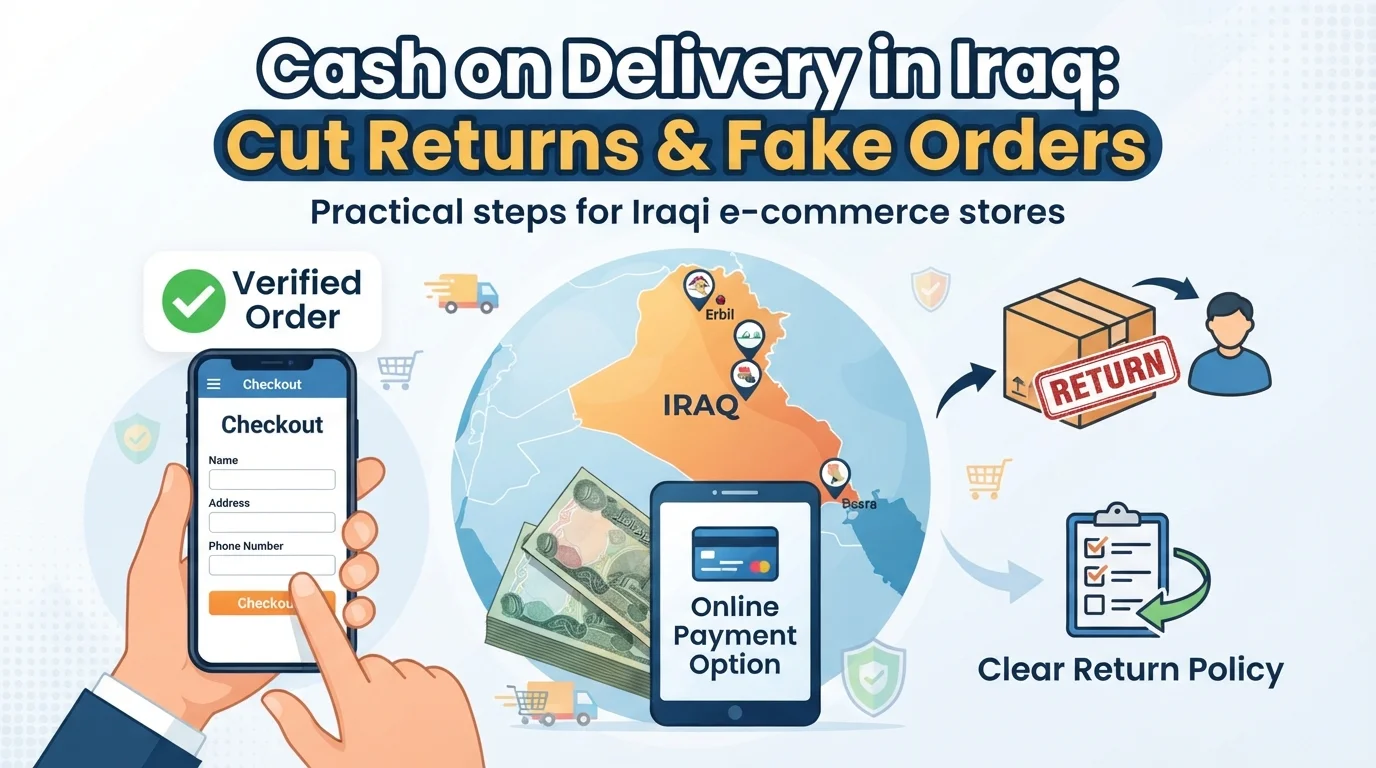
Ask almost any online seller in Iraq about their biggest headache and you will hear the same story. Orders come in, the courier drives across Baghdad or Basra, and the customer does not answer the phone, refuses the parcel, or claims they never ordered. The store pays for delivery both ways, the stock sits in a van for days, and the “sale” turns out to be a loss. Cash on delivery remains the payment method many Iraqi shoppers trust most, so simply switching it off is rarely an option. The real question is how to keep the trust that cash on delivery brings while cutting the fake orders, refusals, and returns that eat into margins.
This guide explains how Iraqi online stores can run cash on delivery profitably: why it remains common, what refused and fake orders really cost, how to confirm orders through WhatsApp or calls, how to design checkout to reduce cancellations, how to write a clear return policy, and when it makes sense to add digital payment options alongside COD.
Why Cash on Delivery Is Still Common in Iraq?
Before trying to reduce the problems, it helps to understand why customers choose cash on delivery in the first place.
Trust Comes First
Many Iraqi shoppers are cautious about paying online to a store they do not know. They worry about receiving the wrong product, poor quality, or nothing at all. Paying when the parcel arrives removes that risk for the customer. For new or smaller stores without a strong reputation, cash on delivery can be the difference between getting an order and losing it.
Payment Habits and Access
Not every customer has, or wants to use, a bank card or digital wallet for online purchases, even though options such as local wallets and payment cards are growing. Cash remains familiar and widely used, which keeps cash on delivery central to Iraqi ecommerce. Offering cash on delivery opens your store to customers who would otherwise not buy at all.
Social Commerce Reinforces It
Much Iraqi ecommerce starts on Instagram, Facebook, and WhatsApp, where customers place orders through messages. In these conversations, cash on delivery feels natural, and the habit carries over when the same customers start ordering from a website.
The Real Cost of Fake Orders and Refusals
Many store owners underestimate how much refused cash on delivery orders cost because the losses are spread across several places.
Direct Costs
Each refused order can mean paying delivery fees for a trip that produced no sale, sometimes paying for the return trip too, and spending staff time preparing, packing, and handling the parcel twice. Some products, such as cosmetics, food, or fashion items, may also be damaged, opened, or out of season by the time they return.
Hidden Costs
Stock tied up in failed deliveries cannot be sold to genuine customers. Couriers may raise fees or deprioritize stores with high refusal rates. Customer service staff spend time chasing people who never intended to buy. When you add these up, a high cash on delivery refusal rate can wipe out the profit from many successful orders.
Measure Before You Fix
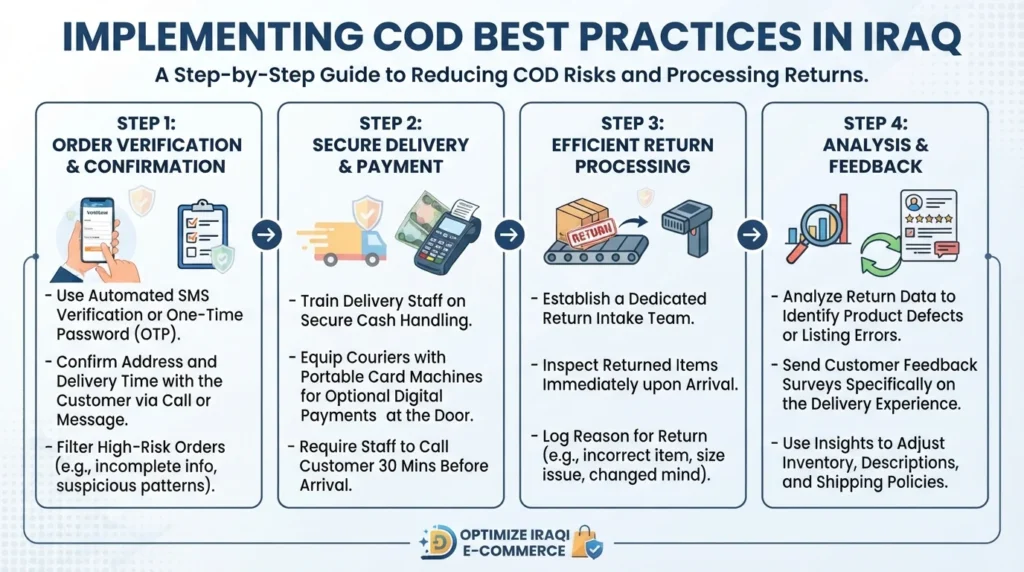
Start by tracking a few simple numbers: total orders, confirmed orders, delivered orders, refused or unreachable orders, and returns after delivery. Break them down by city, product, and traffic source if you can. These figures tell you where cash on delivery problems are concentrated and which fixes will matter most.
Confirming Orders Before Shipping
Order confirmation is the single most effective way to reduce failed cash on delivery deliveries.
Confirm Every Order Quickly
Contact every new cash on delivery order before it is shipped, ideally within an hour or two while the customer still remembers placing it. Confirm the product, size or variant, quantity, total price including delivery, delivery address, and a convenient delivery time. Customers who do not respond after several attempts should not be shipped until they confirm.
Use WhatsApp for Confirmation
For many Iraqi customers, a short WhatsApp message is easier and less intrusive than a phone call. Send a clear summary of the order and ask the customer to reply to confirm. A WhatsApp Business account with quick replies and labels makes this efficient, as explained in our guide to WhatsApp Business for Iraqi companies. Keep a phone call as a backup for customers who do not reply.
Spot Warning Signs
Some patterns suggest a higher risk of refusal: incomplete addresses, phone numbers that do not match the name, multiple orders from the same number with different names, unusually large orders from new customers, or customers with a history of refusals. Flag these cash on delivery orders for extra checking rather than rejecting them automatically.
Keep a Simple Customer History
Record each customer’s phone number and order outcomes. If a number has refused several cash on delivery orders in the past, consider asking for a small deposit or online payment before shipping again. This protects your business without punishing reliable customers.
Designing Checkout to Reduce Cancellations
Many cancellations happen because the customer was confused or surprised. A clear checkout prevents many cash on delivery problems before they start.
Show the Full Price Upfront
Display the product price, delivery fee, and total in Iraqi dinars before the customer confirms. Surprise fees at the door are one of the most common reasons customers refuse cash on delivery parcels. If delivery costs differ by city, show the correct fee for the selected city.
Collect Accurate Addresses
Iraqi addresses often rely on neighborhoods and landmarks. Use address fields that ask for city, district, nearest landmark, and phone number, rather than a single free-text box. Clear addresses reduce failed deliveries and calls from confused couriers.
Set Clear Delivery Expectations
Tell customers how long delivery will take for their city and how the courier will contact them. If a customer expects delivery tomorrow and it arrives in five days, they may have bought elsewhere by then. Accurate timelines reduce cash on delivery refusals.
Keep the Form Short
Ask only for what you need: name, phone, address details, and delivery notes. Long forms frustrate mobile shoppers, while very short forms produce incomplete orders. Test your checkout on a phone, because that is how most Iraqi customers shop. Our article on common ecommerce mistakes in Iraq covers other checkout issues to avoid.
Product Pages That Prevent Refusals
Some customers refuse cash on delivery parcels because the product is not what they expected. Better product information reduces this.
Show Real Photos and Clear Details
On every cash on delivery store, use real photos from several angles, accurate colors, and clear sizing or specifications. For fashion, include a size guide in centimeters. For electronics, list exact models and compatibility. The closer the product matches expectations, the fewer refusals at the door.
Be Honest About Quality and Origin
If a product is a budget option, do not present it as premium. Disappointed customers refuse parcels and leave negative reviews. Honest descriptions protect both your margins and your reputation.
Writing a Clear Return Policy
A clear return policy builds trust and reduces disputes, even for cash on delivery stores.
What to Include?
Explain which items can be returned, within how many days, in what condition, who pays return delivery, and how refunds or exchanges work. Keep the policy short and written in plain Arabic and English. Display it on product pages and at checkout, not hidden in the footer.
Allow Inspection Where Practical
Some stores allow customers to inspect the product in front of the courier before paying. This can reduce disputes later, though it requires clear rules for couriers. Decide what works for your products and state it clearly.
Handle Returns Quickly
When a return is valid, process it quickly and politely. A smooth return experience can turn an unhappy customer into a loyal one, while a difficult one often leads to public complaints.
When to Add Online Payment Alongside COD?
You do not have to choose between cash on delivery and digital payments. Many stores benefit from offering both.
Gradual Introduction
Offer online payment options alongside cash on delivery rather than replacing it. Some customers, especially repeat buyers and younger shoppers, will choose digital payment when it is easy and trusted. Our guide to payment gateways in Iraq explains the options and integration considerations.
Incentives for Prepaid Orders
Some stores offer small benefits for prepaid orders, such as free delivery or faster dispatch. This can shift part of your order volume away from COD without forcing anyone. Make sure any incentive still leaves you profitable compared with cash on delivery.
Partial Deposits for High-Risk Orders
For expensive items, custom orders, or customers with a history of refusals, consider asking for a partial deposit before shipping. Explain the reason politely; most genuine customers understand.
A Cash on Delivery Checklist for Iraqi Stores
Use this checklist to reduce failed COD orders:
- Show total price, including delivery, before the customer confirms.
- Confirm every order by WhatsApp or phone before shipping.
- Collect structured addresses with landmarks and verify phone numbers.
- Track refusals by city, product, and source, and act on the patterns.
- Publish a clear return policy and offer online payment as an option.
Frequently Asked Questions About Cash on Delivery
For most Iraqi stores, no. Cash on delivery brings in customers who would not buy otherwise. Instead, reduce its risks with confirmation, clear pricing, and better product information, and add online payment as an option.
Confirm every order before shipping, flag suspicious patterns, keep a history of customers who refuse orders, and ask for deposits from repeat refusers.
Some refusals are unavoidable, but a consistently high rate usually signals problems with confirmation, pricing transparency, delivery times, or product information. Tracking the data helps you find the cause.
Yes, especially for high-value or custom orders, or for customers with a history of refusals. Explain the policy clearly before the customer orders.
Keep the Trust, Cut the Losses
Cash on delivery remains a powerful way to win trust from Iraqi shoppers, but it needs structure to stay profitable. Confirm orders quickly, show full prices, collect clear addresses, describe products honestly, publish a fair return policy, and add digital payment options over time. The stores that do this keep the customers COD attracts without paying for the deliveries that never turn into sales.
If your online store is losing money on refused orders, Creative 4 All can review your checkout, order flow, and product pages. Explore our ecommerce development services in Iraq, read our guide to building an ecommerce website in Iraq, or get a free quote today.