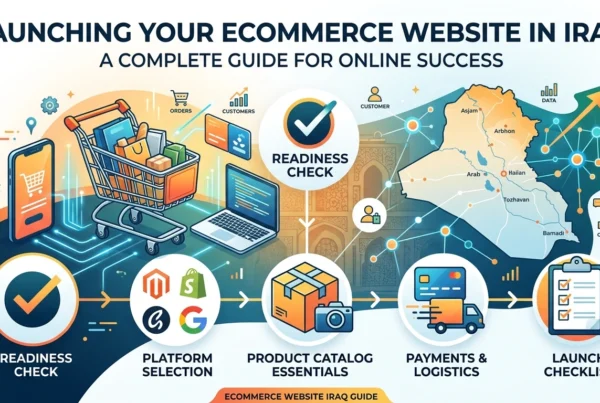


Search for how to accept online payments through the major global platforms, and you’ll quickly hit a wall: Stripe, PayPal, and Shopify Payments don’t support Iraq directly, leaving merchants to navigate a genuinely different landscape than what most ecommerce guides assume. Finding a working payment gateway Iraq merchants can actually rely on requires understanding a local payment infrastructure still actively developing, not simply picking from a standard global list.
This guide covers the real state of online payments in Iraq right now, the specific local providers and integration paths actually available, why cash-on-delivery remains dominant and what that means for how you structure a store, delivery and logistics realities specific to the Iraqi market, and how to build checkout trust in an environment where online payment habits are still forming. If you’ve already hit the Stripe-and-PayPal wall, this guide is built to show you what actually comes next.
The State of Online Payments in Iraq
Why Major Global Platforms Don’t Work Here?
Stripe, PayPal, and Shopify Payments — the default payment processors most ecommerce platforms are built around — don’t currently support Iraq as a merchant country, which is the single biggest structural obstacle Iraqi online sellers face and a gap generic ecommerce guides written for other markets simply don’t address. This isn’t a temporary inconvenience to work around with a plugin; it shapes the entire payment strategy an Iraqi store needs from the outset.
A Market Actively Building Infrastructure
The gap left by major global processors is being filled by a growing set of local and regional players. Iraqi digital wallet ZainCash, First Iraqi Bank’s payment services, and international card scheme access are increasingly being made available to merchants through local integration partners, and new platforms have emerged specifically to help Iraqi merchants navigate the onboarding, compliance, and technical integration process with licensed payment gateways.
A Practical Illustration of the Gap
Consider an Iraqi entrepreneur who launches a Shopify store expecting Stripe or PayPal to work the way it does for merchants in most other countries, only to discover during setup that neither option is available for an Iraq-based merchant account. Rather than abandoning the online sales channel entirely, working through a local integration path — verifying which payment gateway or intermediary platform actually supports the specific ecommerce platform being used — becomes the realistic next step. This gap between global assumption and local reality is precisely why a genuine payment gateway Iraq strategy has to start from what’s actually available here, not what works everywhere else.
Payment Gateway Options Available Locally
PayTabs Iraq
PayTabs operates a dedicated Iraq payment gateway offering online payment processing, payment links shareable through WhatsApp and social media, invoicing, and multi-currency support with settlement in local currency. For merchants running WooCommerce or similar platforms, PayTabs Iraq is one of the more established options with documented integration paths, though merchants should expect a verification and approval process before going live.
ZainCash and Bank-Based Options
ZainCash, a widely used local digital wallet, and bank-based payment options including First Iraqi Bank (FIB), have become accessible to merchants through payment orchestration partnerships connecting international platforms with local Iraqi payment infrastructure — giving Iraqi merchants a path to accept both local digital wallet payments and international card schemes like Visa and Mastercard through a single integration.
Newer Local Intermediary Platforms
Iraq-based platforms have also emerged specifically to simplify merchant onboarding with licensed electronic payment gateways, handling electronic invoicing, payment links, and technical integration so merchants can manage payment operations without navigating bank relationships and compliance requirements entirely on their own. These intermediary platforms don’t hold or process funds themselves — that remains the responsibility of the licensed gateway — but they meaningfully reduce the friction of getting set up.
A Quick Payment Setup Checklist
- Confirm which local payment gateway or intermediary platform actually supports your specific ecommerce platform.
- Budget realistic time for merchant verification and compliance approval, which can take longer than global platforms typically require.
- Clarify who holds and settles funds versus who provides only technical integration.
- Test the full payment flow, including any WhatsApp or social payment links, before fully launching.
Why Cash-on-Delivery Still Dominates?
Trust Still Being Built
Cash on delivery remains a strong preference for many Iraqi online shoppers, reflecting trust in digital payment methods that’s still developing rather than a permanent resistance to online payment itself. This makes cash on delivery not a limitation to work around temporarily, but a genuine, ongoing part of a realistic ecommerce payment Iraq strategy for the foreseeable future.
Designing Around Cash-on-Delivery Realities
Offering cash on delivery well means accurate address collection to reduce failed delivery attempts, clear order confirmation so customers know exactly what to expect and pay, and delivery staff equipped to handle the cash collection and reconciliation process reliably. Treating cash on delivery as a secondary afterthought rather than a fully supported primary payment method undermines the channel most Iraqi customers still actually prefer.
Layering Digital Payments Alongside, Not Instead
The realistic path forward for most Iraqi ecommerce businesses is offering both cash on delivery and digital payment options side by side, letting customer preference drive adoption over time rather than forcing a shift to digital-only payment before trust has genuinely developed.
Structuring Delivery & Logistics
Local Last-Mile Delivery Providers
Dedicated logistics companies have emerged specifically to serve Iraqi ecommerce, offering last-mile delivery, warehousing, fulfillment, and cash-on-delivery collection with direct platform integrations. Galina Express, for instance, offers a WooCommerce integration handling shipment creation, tracking, and cash-on-delivery collection specifically for Iraq-destination orders, reflecting the kind of local logistics infrastructure that’s developed specifically around ecommerce needs rather than general freight.
Major Retail Partnerships as a Signal
Larger-scale partnerships — such as Zain Mart’s collaboration with Waseet Express Delivery to expand same-day delivery capability — signal that Iraqi ecommerce logistics infrastructure is actively maturing, with established delivery partners increasingly investing in the speed and reliability ecommerce specifically requires, beyond general courier services.
Choosing a Logistics Partner That Fits Your Scale
A small merchant shipping a modest volume of orders per week has different logistics needs than a large retailer processing hundreds of daily orders across multiple cities. Matching the logistics partner and integration approach to actual order volume — rather than defaulting to whichever provider is easiest to find — avoids both overpaying for enterprise-grade logistics infrastructure a small store doesn’t need, and underinvesting in fulfillment capability a growing store will quickly outgrow.
Setting Realistic Delivery Expectations
Delivery timeframes vary meaningfully by city and region within Iraq, and setting realistic delivery windows based on actual fulfillment capability and chosen logistics partner protects customer trust better than promising delivery speeds a business can’t consistently achieve. Shipping for ecommerce Iraq businesses plan should account for these regional differences explicitly in checkout messaging, rather than presenting a single uniform delivery estimate nationwide.

Building Trust at Checkout
Transparency About Payment and Delivery
Clearly communicating available payment methods, expected delivery timeframes, and what happens if a delivery attempt fails builds the kind of transparency that matters disproportionately in a market where online purchasing trust is still developing for many shoppers.
WhatsApp as a Trust-Building Tool?
Given how central WhatsApp is to Iraqi commerce generally, offering a direct WhatsApp contact option for order confirmation, payment questions, or delivery coordination provides a layer of human reassurance that a purely automated checkout flow doesn’t offer on its own — often meaningfully improving both conversion and post-purchase satisfaction.
Creative 4 All builds ecommerce development services for Iraqi businesses with realistic payment and logistics strategies built in from the start, not generic global assumptions retrofitted after launch.
Request a Free Audit to get an honest assessment of which payment gateway and logistics setup actually fits your specific product and target customers.
FAQs
No, not directly — neither currently supports Iraq as a merchant country. Iraqi merchants typically need to work with local or regional payment gateways and intermediary platforms instead.
Options include local gateways like PayTabs Iraq, digital wallets like ZainCash, and payment orchestration partnerships that connect international infrastructure with local Iraqi payment rails — each with its own setup and verification process.
Yes, offered alongside cash on delivery rather than instead of it. Digital payment adoption is growing, and offering both accommodates the full range of customer comfort levels rather than limiting your addressable market.
Regional variation in delivery capability and timeframes across different cities, which makes setting realistic, transparent delivery expectations more important than promising a single uniform delivery speed nationwide.
It varies by provider, but Iraqi merchants should generally expect a longer verification and compliance process than typical for global platforms in more established ecommerce markets, given the added regulatory and KYC requirements local licensed gateways apply.