A marketing manager at a mid-sized company in Erbil described her first month with AI tools honestly: “It saved me hours on captions, then it invented a product feature we don’t have, and my manager nearly posted it.” That mix of real time savings and real risk sums up AI in digital marketing for most Iraqi businesses right now. The tools are useful, widely available, and improving quickly. They are also confident when they are wrong, uneven in Arabic, and easy to misuse with customer data.
This guide takes a practical view of AI in digital marketing for Iraqi companies. Instead of predictions or hype, it covers where AI genuinely helps today, where it does not, how to handle Arabic content, how to use AI for ads, customer replies, and reporting, and which safeguards every team should put in place before relying on it.
What AI Can and Cannot Do in Marketing?
The most useful starting point for AI in marketing is a clear view of strengths and limits.
Where AI in Marketing Is Genuinely Useful
AI tools are good at producing first drafts, summarizing information, suggesting variations, organizing data, and answering routine questions quickly. In practice, that means faster captions, ad copy variations, content outlines, keyword grouping, report summaries, and first-line customer responses. Used this way, AI in marketing frees people to spend more time on strategy, creative judgment, and customers.
Where AI Falls Short
AI does not know your business, your prices, your stock, or your customers unless you tell it, and even then it can misstate facts. It can produce text that sounds right but is wrong, a problem often called hallucination. It can miss cultural nuance, local terms, and sensitivities. And it has no responsibility for what gets published; with AI in marketing, your company does.
The Right Mental Model
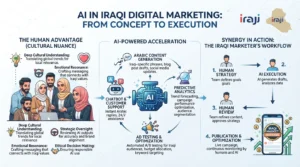
Treat AI like a fast, capable junior assistant who has read a lot but has never worked at your company. It can draft, suggest, and organize, but a knowledgeable person must check, correct, and approve the output. Teams that adopt this model get the benefits of AI in digital marketing without the embarrassing mistakes.
Arabic Content: Drafts, Not Final Copy
For Iraqi businesses, the biggest question about AI in marketing is how well AI handles Arabic.
Quality Varies by Task
Modern AI tools can produce reasonable Modern Standard Arabic for many tasks, especially short marketing text and structured content. Quality is less consistent for longer persuasive writing, technical terminology, and Iraqi dialect. Phrasing can sound translated, stiff, or slightly off for local readers, which is the main limit of AI in marketing in Iraq today.
Use AI for Structure and Speed
AI works well for outlining an article, suggesting headline options, rewriting a paragraph more simply, or creating several caption variations in Arabic and English. A native-speaking editor should then review tone, accuracy, and local relevance. This combination is where AI in marketing delivers the most value for Arabic content.
Do Not Let AI Invent Iraqi Facts
AI tools may produce statistics, regulations, prices, or claims about Iraq that are outdated or simply made up. Every factual statement produced through AI in marketing should be checked against a reliable source before publishing. Our statistics hub on Iraq digital statistics is an example of the kind of sourced reference AI-assisted content should rely on.
Keyword Research Still Needs Humans
AI can suggest Arabic keyword ideas, but it cannot tell you how Iraqis actually search. Combine its suggestions with real data from Google tools and Search Console, as explained in our guide to Arabic keyword research.
AI for Ads and Creative Testing
Advertising is one of the most practical areas for AI in digital marketing.
Generating Ad Variations
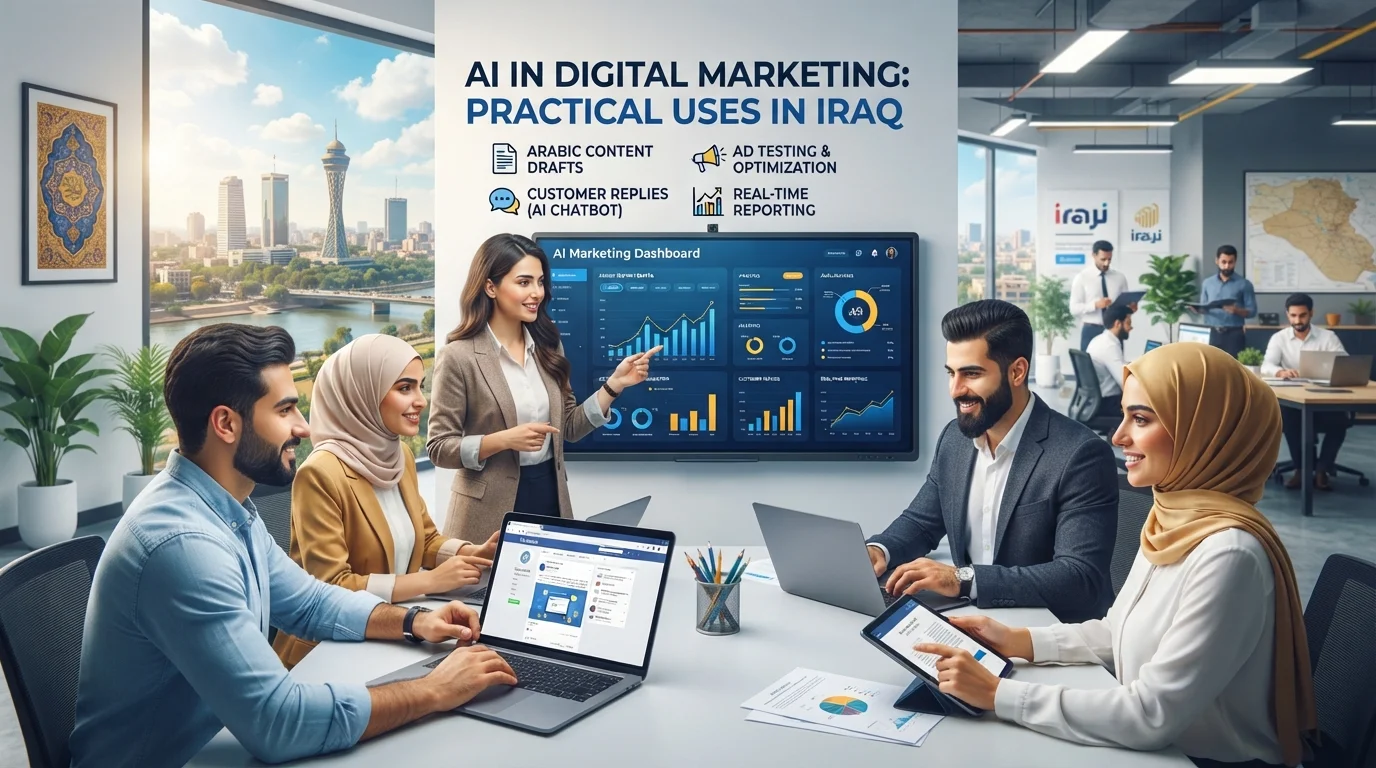
AI can quickly produce many headline, description, and caption variations for Google, Meta, TikTok, and Snapchat campaigns. Testing more variations helps you find messages that resonate with Iraqi audiences faster than writing each one by hand, which makes ad testing one of the clearest wins for AI in marketing.
Platform AI Features
Advertising platforms themselves increasingly use AI for targeting, bidding, and creative optimization, such as automated bidding toward conversions and automatic combinations of headlines and images. These features work best when conversion tracking is accurate, so make sure WhatsApp clicks, calls, and forms are tracked properly first. Our guide to GA4 lead tracking explains how.
Keep Brand and Legal Control
Even with AI in marketing, ads still need human approval for accuracy, tone, brand consistency, and compliance with platform policies. Avoid exaggerated promises the AI may produce, such as guaranteed results or unrealistic discounts.
Landing Pages Matter More Than Ever
AI can help draft landing page copy, but the page must still match the ad, load quickly on mobile, and lead clearly to WhatsApp or a form. See our guide to landing page design for Iraqi ad campaigns.
AI for Customer Replies
Customer communication is where AI in marketing can save the most time, and where mistakes are most visible.
Drafting Replies Faster
AI can help staff draft polite, consistent replies to common questions on WhatsApp, Instagram, or email, especially in both Arabic and English. Staff then personalize and send. This form of AI in marketing speeds up responses without handing control to a machine.
Chatbots for Routine Questions
Well-designed chatbots can answer frequently asked questions about hours, locations, delivery, and prices, collect basic details, and pass conversations to a person when needed. Poorly designed ones frustrate customers. Our guide to AI chatbots for Iraqi businesses explains when they help and when they hurt.
Always Offer a Human Option
Iraqi customers often prefer talking to a real person, especially for complaints, high-value purchases, and anything sensitive. Make it easy to reach a human at any point; good AI in marketing supports people rather than replacing them.
AI for Reporting and Analysis
Reporting is a less glamorous but very practical use of AI in digital marketing.
Summarizing Performance
AI can help turn exported data from Google Analytics, ad platforms, or your CRM into plain-language summaries: what changed, which campaigns performed best, and where results dropped. This makes monthly reports faster to produce and easier for managers to read.
Spotting Patterns
AI tools can help group customer feedback, reviews, or questions into themes, revealing recurring complaints or common requests. These insights from AI in marketing can guide content, service improvements, and campaigns.
Check the Numbers
AI can miscalculate or misread data. Always check figures against the original reports before presenting them, and never let AI-generated analysis replace the source data.
AI in Marketing for Different Iraqi Businesses
The right use of AI in marketing depends on what you sell and who you sell to.
Retail and Ecommerce Stores
Online stores benefit most from AI for product description drafts, ad variations, and answering repeated questions about sizes, delivery, and cash on delivery. A human should still check every price and product detail before publishing.
Clinics and Professional Services
For clinics, law firms, and consultancies, AI in marketing is most useful for drafting educational content and organizing enquiries. Medical, legal, and financial claims must always be reviewed by a qualified person, and no patient or client details should ever be entered into public tools.
B2B and Industrial Companies
Contractors and B2B suppliers can use AI to summarize tender requirements, draft proposal sections, and prepare LinkedIn posts. The technical accuracy still depends on the engineers and managers who know the work.
Risks: Accuracy, Brand Voice, and Privacy
Every team using AI in marketing should understand three main risks.
Accuracy and Hallucinations
AI can state false information confidently. In marketing, that can mean wrong prices, invented features, inaccurate claims about competitors, or false statistics. A simple rule helps: nothing AI-generated is published without a human checking every fact.
Brand Voice Drift
If different staff use AI in marketing without guidance, your brand can start sounding generic or inconsistent. Create a short brand voice guide with examples and preferred terms in Arabic and English, and use it in prompts and reviews.
Customer Data and Privacy
Be careful about pasting customer names, phone numbers, order details, or confidential business information into public AI tools. Check each tool’s data policy, use business versions where available, and set clear internal rules about what can and cannot be shared.
Search Engines and AI Content
Google has stated that it focuses on the quality and helpfulness of content rather than how it was produced, but mass-producing low-value pages to manipulate rankings violates its spam policies. AI-assisted content should still be original, accurate, and genuinely useful. Our article on AI and SEO in Iraq covers how search is changing.
AI in Digital Marketing: Practical Uses in Iraq
How to Start Using AI in Your Marketing Team
You do not need a large budget or new hires to start with AI in marketing.
Start With Three Low-Risk Tasks
Pick tasks where mistakes are easy to catch and the time savings are clear, for example:
- Drafting social media captions and ad variations for human review.
- Creating outlines and first drafts for blog articles.
- Summarizing monthly analytics exports into plain-language notes.
Measure time saved and quality over a month, then expand gradually.
Write Simple Team Guidelines
Agree on which tools are approved, what information must never be entered, who reviews AI output, and how to label internal drafts. A one-page guideline for AI in marketing prevents most problems.
Train People, Not Just Tools
The difference between useful and useless AI output often comes down to the instructions given. Train staff to write clear prompts with context, audience, tone, and constraints, and to review output critically. For a broader view of where AI fits in your business, read our guide on where to start with AI for Iraqi businesses.
Frequently Asked Questions About AI in Digital Marketing
Can AI replace my marketing team?
No. AI can speed up drafting, testing, and reporting, but strategy, local knowledge, creative judgment, customer relationships, and accountability still require people.
Is AI-written Arabic content good enough to publish?
Sometimes as a starting point, rarely as final copy. That is the realistic role of AI in marketing for Arabic content. A native-speaking editor should review tone, accuracy, and local relevance before anything is published.
Will Google penalize AI-assisted content?
Google says it focuses on quality and helpfulness, not production method. Low-value content produced at scale to manipulate rankings can violate its spam policies, so focus on originality and accuracy.
Is it safe to put customer data into AI tools?
Only with care. Check each tool’s data policy, use business versions where possible, and avoid entering personal or confidential information into public tools.
Use AI to Work Faster, Not to Think Less
AI in digital marketing offers Iraqi businesses real advantages: faster drafts, more ad testing, quicker replies, and easier reporting. The value comes from pairing AI’s speed with human knowledge of the market, the language, and the customer. Start small, set clear rules, check every fact, and expand where the results are proven.
If you want help introducing AI into your marketing safely and effectively, Creative 4 All can review your processes and recommend practical first steps. Explore our digital marketing services in Iraq or request a consultation today.