A procurement manager in Baghdad once sent the same one-line email to five web agencies: “We need a new company website, please send your best price.” The quotes that came back ranged from a few hundred dollars to many thousands. One proposed a template, another a custom platform, a third an online store nobody had asked for. None of them could be compared, because each agency had guessed what the company wanted. A clear website brief would have prevented all of it.
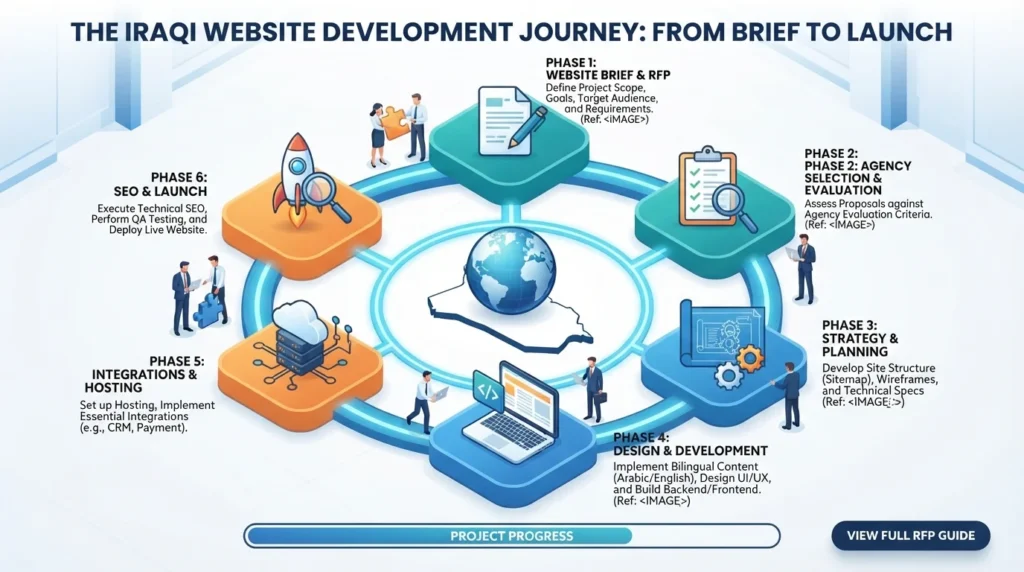
This guide explains how to write a website brief, sometimes called a request for proposal or RFP, that gets you accurate, comparable quotes from web design companies in Iraq. You will learn what to include, how to describe languages, features, and integrations, how to set evaluation criteria, and you will get a ready-to-use template you can copy and fill in.
Why a Website Brief Saves Time and Money?
A website brief is a short document that describes your business, your goals for the website, what it needs to do, and how you will choose a provider. It does not need to be long or technical. It needs to be clear.
Better Quotes, Faster
When agencies understand exactly what you need, they can quote accurately instead of guessing. You receive proposals that cover the same scope, so you can compare price, approach, and timeline fairly. Without a website brief, the cheapest quote often looks attractive only because it leaves out half the work.
Fewer Surprises During the Project
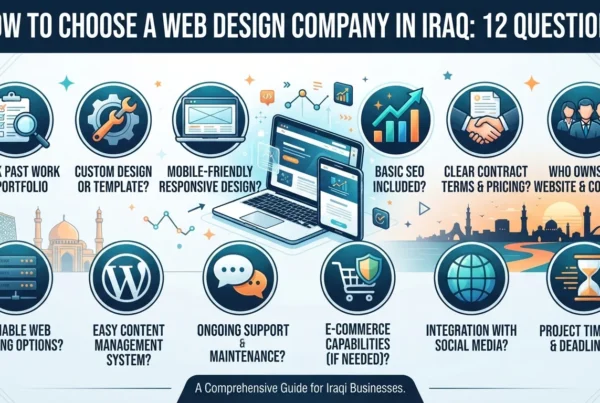
Most website disputes come from different expectations: the client assumed something was included, the agency assumed it was not. A written website brief becomes the shared reference for both sides, and later for the contract. Our guide to choosing a web design company in Iraq explains how to use it when comparing providers.
Internal Alignment
Writing a website brief forces your own team to agree on goals before spending money. Marketing, sales, IT, and management often have different ideas about what the website should do. Settling those differences on paper is far cheaper than changing direction halfway through a project.
Section 1: Business Goals and Audience
Start your website brief with context, not features.
Describe Your Business in a Few Lines
In this part of the website brief, explain what your company does, how long it has operated, where it works in Iraq, and what makes it different. Mention branches or cities you serve. Agencies use this to understand your market and suggest the right structure.
State What the Website Must Achieve
Be specific about the goals in your website brief. “More WhatsApp enquiries from Baghdad clinics,” “credible presence for tender submissions,” “online sales of our product range,” or “recruitment of engineers” are useful goals. “A modern website” is not. If possible, explain how you will measure success.
Describe Your Audience
Who will use the site? Iraqi consumers, business buyers, international partners, job seekers, or several of these? Which languages do they use? Do they mainly browse on mobile? A website brief that explains the audience helps agencies make better design and content decisions.
Section 2: Languages and Content
Language decisions affect cost and timeline more than many companies expect.
Specify Every Language
Your website brief should state whether the site needs Arabic, English, Kurdish, or a combination, and whether every page must exist in every language. Bilingual and trilingual sites require more design, development, and content work. Our article on bilingual website design explains the key considerations.
Clarify Who Provides Content
Say whether you will supply all text and photos, or whether you expect the agency to write content, translate, or organize photography. Content readiness is one of the most common causes of project delays, so make this explicit in your website brief.
Estimate the Number of Pages
List the main pages you expect: home, about, each service or product category, contact, branch pages, blog, careers, and so on. An approximate page list helps agencies estimate effort accurately.
Section 3: Features and Integrations
This section tells agencies what the website must do beyond showing information.
Essential Features
In your website brief, describe the features you need: contact forms, WhatsApp buttons, maps, branch locator, booking system, online store, quote request forms, downloadable company profile, job applications, or customer login. Mark each as essential or nice to have.
Integrations With Other Systems
If the site must connect to a CRM, accounting software, inventory system, payment gateway, delivery company, or email marketing platform, name them. Integrations are often where costs and timelines grow, so mentioning them early in your website brief avoids unpleasant surprises.
Content Management
The website brief should also state who will update the site after launch and how often. If your team will add news, products, or job openings regularly, ask for an easy-to-use content management system and training.
Section 4: Hosting, Security, and Ownership
These points protect your business long after launch.
Domain and Hosting
State whether you already own a domain and hosting, or whether the agency should provide them. Require that any domain be registered in your company’s name. Our guide to .iq domain registration explains why this matters.
Security and Maintenance
Ask agencies to describe their approach to SSL, backups, updates, and security monitoring, and whether they offer ongoing maintenance. A website brief that asks about maintenance from the start avoids neglected sites later, as covered in our website maintenance guide.
Ownership and Access
Require full ownership of the design, content, and code after payment, plus administrator access to the website and hosting. Ask agencies to confirm this in their proposal.
Section 5: SEO, Performance, and Tracking
A website that cannot be found or measured will not deliver results.
SEO Basics
Use the website brief to ask what SEO setup is included at launch: titles, meta descriptions, clean URLs, headings, sitemap, Search Console, structured data, and redirects from any old site. If you are replacing an existing website, require a redirect plan so you do not lose existing rankings.
Speed and Mobile Performance
State that the site must load quickly on mobile connections in Iraq and work well on mid-range phones. Ask how the agency will test this.
Analytics and Lead Tracking
Ask for Google Analytics 4 setup with tracking for WhatsApp clicks, phone taps, and form submissions. Without tracking, you will not know whether the new website is working.
Section 6: Budget, Timeline, and Evaluation Criteria
The final section helps agencies tailor proposals and helps you choose fairly.
Share a Budget Range
Many companies hesitate to share a budget, but a range helps agencies propose a realistic solution instead of guessing. You can still compare value within that range. Our guide to website cost in Iraq can help you set realistic expectations.
Set a Timeline
State when you need the site, and whether that date is fixed, for example for an event, exhibition, or tender. Ask agencies to confirm whether they can meet it and what they need from you to do so.
Explain How You Will Choose
Tell agencies how you will evaluate proposals, for example by relevant experience, approach, Arabic capability, support terms, timeline, and price. Clear criteria in your website brief encourage better, more focused proposals and make your own decision easier.
Proposal Format and Deadline
Ask for proposals in a consistent format, including scope, timeline, team, cost breakdown, support terms, and examples of similar work, and set a deadline for submissions.
Copy and Fill In
Copy this website brief template into a document, fill in each section, and send it to the agencies on your shortlist:
WEBSITE PROJECT BRIEF / RFP
1. Company overview
Company name, sector, cities served, years in operation, what makes us different:
2. Website goals and success measures
Main goals (e.g. enquiries, sales, tenders, recruitment):
How we will measure success:
3. Audience
Main audiences, languages they use, mobile vs desktop:
4. Languages and content
Languages required (Arabic / English / Kurdish):
Content provided by us or by the agency (text, translation, photos):
Approximate page list:
5. Features and integrations
Essential features:
Nice-to-have features:
Systems to integrate (CRM, payments, delivery, email):
6. Hosting, security, ownership
Existing domain/hosting (yes/no):
Domain must be registered in our company name: yes
Ownership and admin access required: yes
Maintenance and support expectations:
7. SEO, performance, tracking
Replacing an existing site (yes/no, URL):
SEO setup expected at launch:
Tracking required (WhatsApp, calls, forms):
8. Budget and timeline
Budget range:
Target launch date (fixed or flexible):
9. Evaluation criteria and proposal format
How proposals will be evaluated:
Required proposal contents:
Submission deadline and contact person:
Keep the completed brief to a few pages. Agencies respond best to clear, concise documents, and a short website brief is more likely to be read carefully than a long one.
What to Do After Sending the Website Brief?
Sending the website brief is the start of the selection process, not the end.
Answer Questions Openly
Good agencies will ask follow-up questions. Answer them, and share the answers with every agency on your list so everyone quotes on the same information.
Compare Proposals Against the Brief
When proposals arrive, check each one against your website brief section by section. Note where an agency added something, left something out, or suggested a different approach, and ask why.
Common Mistakes When Writing a Website Brief
Avoid these frequent errors:
- Listing features without explaining business goals.
- Leaving out languages, integrations, or content responsibilities.
- Hiding the budget completely, which leads to proposals that do not fit.
- Forgetting ownership, hosting, and maintenance requirements.
Fixing these before you send the brief will improve every proposal you receive.
Frequently Asked Questions About Website Briefs
Usually two to five pages is enough. Focus on clarity over length. Agencies need goals, scope, languages, features, constraints, and evaluation criteria, not pages of general background.
They overlap. A website brief describes what you need; an RFP adds formal proposal requirements, deadlines, and evaluation criteria. The template above combines both.
Sending it to three to five suitable agencies usually gives enough choice without overwhelming your team with proposals to review.
Yes. Many agencies offer discovery sessions to help define requirements. Just remember that a brief written with one agency may reflect its preferred approach, so review it carefully before sending it to others.
Start Your Project With Clarity
A clear website brief turns a confusing quoting process into a fair comparison. It aligns your team, helps agencies propose the right solution, protects ownership and quality, and makes the final contract easier to agree. Copy the template, fill it in honestly, and send it to a short list of qualified providers.
If you would like Creative 4 All to respond to your brief, or help you write one, we are happy to talk. Explore our web design and development services in Iraq or get a quote today.