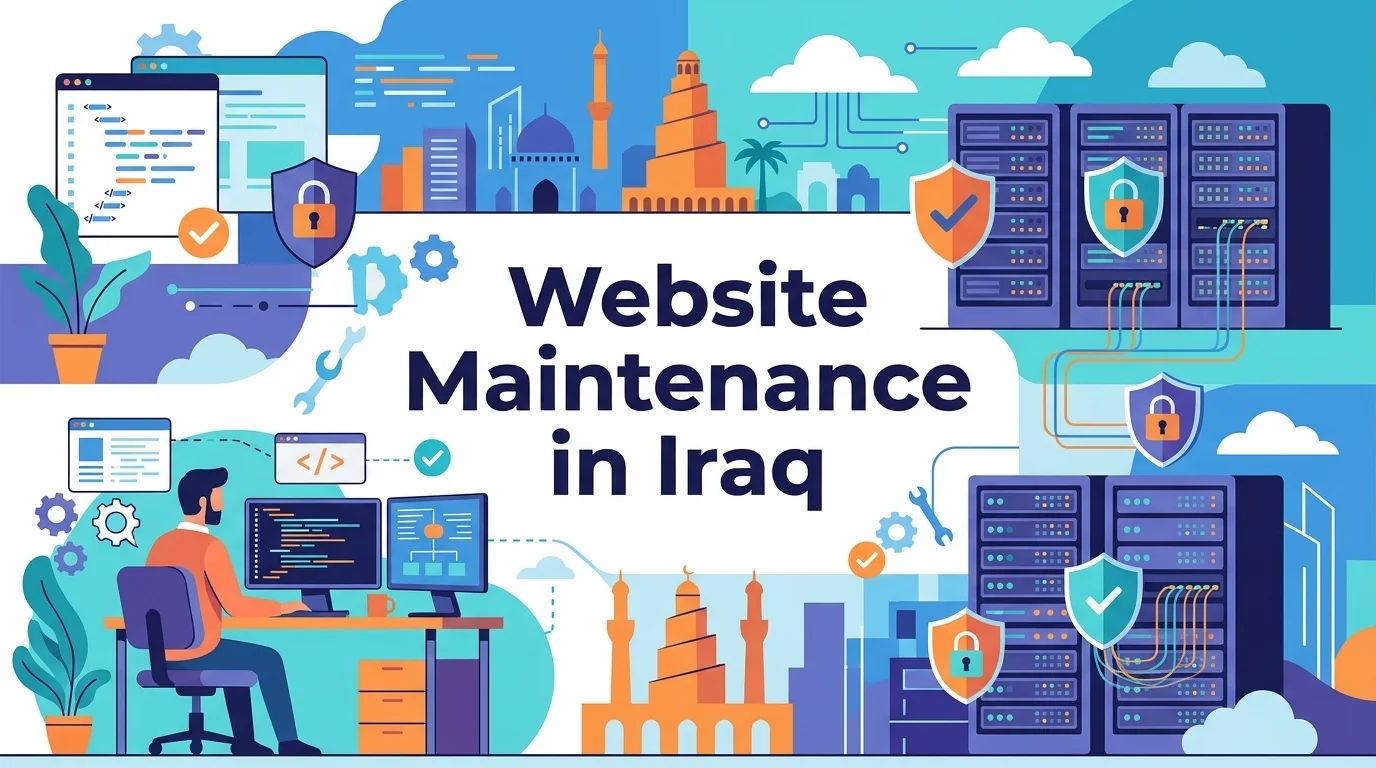
Most Iraqi businesses treat a new website like a new shop sign: pay once, put it up, and forget about it. The difference is that a sign does not quietly break when software changes, does not get attacked by bots at 3 a.m., and does not stop showing your phone number because a plugin update failed. A website does all of these things. We regularly speak to companies whose sites stopped working months ago without anyone noticing, until a customer mentioned it on WhatsApp. Website maintenance is what prevents that, and it is usually far cheaper than the emergency repair, lost enquiries, or full rebuild that neglect eventually causes.
This guide explains website maintenance for businesses in Iraq in practical terms: what it includes, what goes wrong when you skip it, how updates and backups work, why security and uptime monitoring matter, and how to decide between handling it in-house and using an agency plan.
What Website Maintenance Actually Includes
Website maintenance is the ongoing work that keeps a site secure, fast, functional, and up to date after launch. It is not one task but a routine of small tasks done regularly, most of them invisible when everything is working.
Technical Maintenance
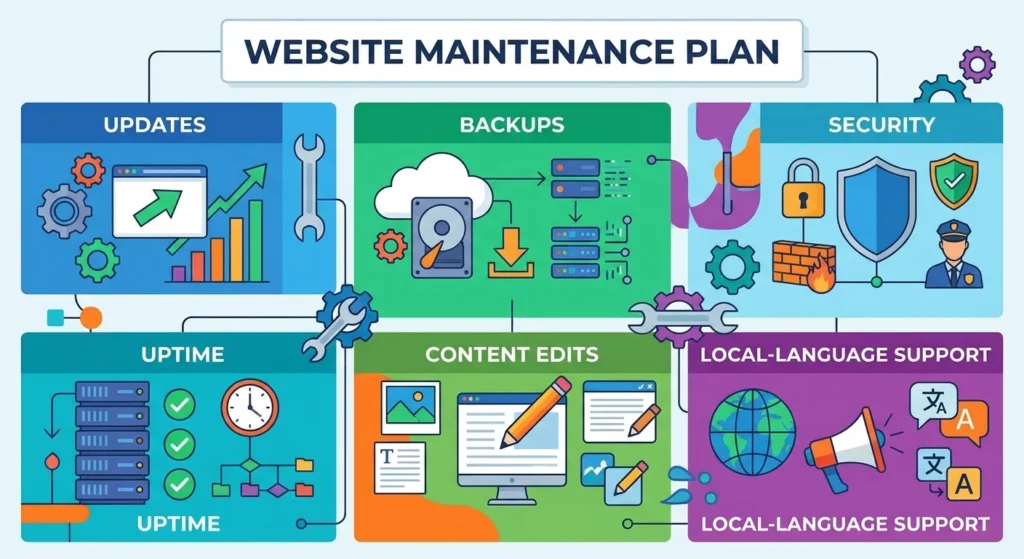
This covers updating the content management system, themes, and plugins; checking forms and checkout flows still work; renewing SSL certificates and domains on time; monitoring uptime; and keeping the server environment current. These tasks are routine, but missing them is what causes most website failures, which is why technical work sits at the core of website maintenance.
Security Maintenance
Security work includes scanning for malware, reviewing user accounts and passwords, applying security patches promptly, and keeping a firewall or security plugin configured. Business websites are attacked constantly by automated bots, regardless of the company’s size or location. Small Iraqi company sites are not ignored; they are often targeted precisely because attackers expect weak defenses and little website maintenance.
Content and Performance Maintenance
Good website maintenance also covers small content edits such as new prices, staff changes, holiday hours, and new services; image optimization; fixing broken links; and checking page speed. A technically healthy site with outdated information still loses customers.
The Real Risks of Skipping Website Maintenance
Neglect rarely causes one dramatic failure. More often, problems build quietly until something visible breaks.
Broken Contact Forms and WhatsApp Buttons
One of the most common issues we find is a contact form that stopped sending emails after a server or plugin change, or a WhatsApp button pointing to an old number. The website looks fine, but enquiries disappear. Without regular website maintenance, nobody notices until the sales team wonders why leads dried up.
Hacked Sites and Search Penalties
Outdated plugins are a leading way attackers get into WordPress sites. A hacked site may redirect visitors to spam pages, display unwanted content, or send spam email from your domain. Google may show warnings to searchers or drop the site from results until it is cleaned. Recovering from a hack takes time and money, and the damage to trust can last longer than the technical fix. Consistent website maintenance is far cheaper than cleanup.
Slow Pages and Lost Rankings
Over time, unoptimized images, unused plugins, and bloated databases slow a site down. Slow pages frustrate visitors on mobile connections and can affect search performance. Routine website maintenance keeps speed under control instead of letting it drift for years.
Expired Domains and SSL Certificates
An expired domain takes your website and business email offline entirely. An expired SSL certificate triggers browser warnings that scare visitors away. Both are easy to prevent with simple reminders, auto-renewal, and basic website maintenance, yet both happen surprisingly often to Iraqi businesses whose original developer has moved on.
WordPress Updates, Themes, and Plugins
Many Iraqi business sites run on WordPress, which is flexible and widely supported but needs regular care. If your site runs on another platform, the principles of website maintenance are the same.
Why Updates Matter
WordPress core, themes, and plugins release updates to fix bugs, close security holes, and stay compatible with newer versions of PHP and browsers. Ignoring updates for months increases the chance that one outdated component becomes a security weakness or breaks when the hosting company upgrades its servers.
Update Safely, Not Blindly
Clicking “update all” on a live site without a backup is risky. A professional website maintenance routine backs up the site first, applies updates in a sensible order, tests key pages and forms afterward, and rolls back if something breaks. For larger or business-critical sites, updates are tested on a staging copy before going live.
Remove What You Do Not Use
Inactive plugins and themes still carry risk if they contain vulnerabilities. Part of good website maintenance is removing anything unused and replacing abandoned plugins that no longer receive updates. Fewer components mean fewer things to break, and less website maintenance time every month.
Backups and Recovery
Backups are the safety net of website maintenance. You hope never to need them, but when you do, nothing else matters as much.
What a Good Backup Setup Looks Like?
Back up both files and the database, automatically, on a schedule that matches how often the site changes. A busy online store may need daily or more frequent backups; a simple company site may need weekly. Keep several copies over time, not just the latest one, so you can restore from before a problem started.
Store Backups Off the Server
Backups stored only on the same server as the website can disappear with it if the server fails or is compromised. Keep copies in a separate location, such as cloud storage. Many hosting backups are convenient but not sufficient on their own as a website maintenance strategy.
Test Restores Regularly
A backup that has never been restored is a hope, not a plan. Periodically restore a backup to a test environment to confirm it works. This step of website maintenance is often skipped, and it is exactly why some businesses discover their backups were incomplete only after disaster strikes.
Security and Uptime Monitoring
Monitoring turns website maintenance from reactive to proactive. Instead of hearing about problems from customers, you find them first.
Uptime Monitoring
Uptime tools check your site every few minutes and alert you if it goes down. This matters for any business that relies on online enquiries or sales. If your site goes offline on a Thursday evening, you want to know within minutes, not on Sunday morning.
Security Scanning and Login Protection
Regular malware scans, login attempt limits, two-factor authentication for administrators, and strong passwords dramatically reduce risk. Review who has admin access, especially former employees, freelancers, or agencies you no longer work with. Old accounts are a common entry point, so access reviews belong in every website maintenance routine.
Hosting Matters Too
Your hosting environment affects security and speed. Reliable hosting with up-to-date server software, firewalls, and responsive support makes website maintenance easier and more effective. If you are unsure whether your hosting is adequate, our web hosting and domain services in Iraq page explains what to look for.
Content Updates and Local-Language Support
For Iraqi businesses, website maintenance is not only technical. Your website must keep reflecting your real business in Arabic and English.
Keep Information Accurate
Prices, services, branch addresses, working hours, team members, and contact numbers change. Outdated information on your site creates confusion and lost trust, especially when customers call a number that no longer works. Include regular content reviews in your website maintenance plan, with a simple way for staff to request edits.
Maintain Both Language Versions
Bilingual sites often drift: the English version gets updated while the Arabic version stays old, or the reverse. Make sure every content change is applied to both languages and that Arabic text still displays correctly after theme or plugin updates. Right-to-left layouts can break subtly after updates, so check key Arabic pages each time.
Seasonal and Promotional Updates
Ramadan hours, Eid closures, seasonal offers, and new product launches all need timely updates. A maintenance plan with a fast turnaround for small edits keeps your site aligned with your marketing instead of lagging weeks behind.
In-House vs Agency Website Maintenance
Both approaches to website maintenance can work. The right choice depends on your team’s skills, time, and the importance of the website to your revenue.
When In-House Makes Sense
If you have a capable IT or marketing team member with time to follow a checklist, handling basic website maintenance internally can work for simpler sites. Document every task, keep admin credentials secure, and make sure more than one person knows how to restore a backup.
When an Agency Plan Makes Sense
If your site generates leads or sales, runs ecommerce, or is built on custom code, an agency plan usually provides more reliable coverage: scheduled updates with testing, off-site backups, monitoring, security response, and a team that can fix problems quickly. It also removes the risk of depending on one employee or freelancer who may leave.
What to Ask Before Choosing a Maintenance Plan?
Ask how often updates are applied and tested, where backups are stored and how often restores are tested, what monitoring is included, how fast urgent issues are handled, how many content edits are included each month, and whether support is available in Arabic. Clear answers tell you more than a low monthly price. If your current site is outdated beyond what maintenance can fix, our guide to website redesign in Iraq helps you decide whether rebuilding makes more sense.
A Simple Website Maintenance Checklist
If you want a starting point, these routines cover the essentials for most business sites:
- Weekly: check uptime alerts, test the contact form and WhatsApp button, review security scan results.
- Monthly: back up and apply updates with testing, review admin users, check page speed and broken links.
- Quarterly: test a backup restore, review content in both languages, confirm domain and SSL renewal dates.
- Yearly: review hosting, remove unused plugins, and decide whether design or structure needs a refresh.
Following this rhythm turns website maintenance into a manageable habit rather than a crisis response.
Frequently Asked Questions About Website Maintenance
It depends on the site’s size, platform, traffic, and the services included, such as backups, monitoring, security response, and content edits. Compare plans by what they include rather than by monthly price alone.
Yes. Even simple sites run software that needs updates, and they can be attacked or break after hosting changes. Simpler sites need less work, not none.
Basic tasks are manageable with a checklist and some technical comfort. The risk lies in updating without backups, missing security issues, or not knowing how to recover when something breaks.
Software updates should be checked at least monthly, with security patches applied quickly. Content should be reviewed whenever business details change and fully audited a few times a year.
Protect the Website You Already Paid For
Website maintenance protects your investment, your reputation, and your enquiries. Regular updates, tested backups, security monitoring, accurate bilingual content, and fast fixes keep your site working as the sales tool it was meant to be, instead of a liability waiting to fail.
If your website has not been maintained in a while, Creative 4 All can review its health and recommend a plan that fits your business. Explore our web design and development services in Iraq, learn about our CMS and WordPress services, or get in touch to discuss your website.