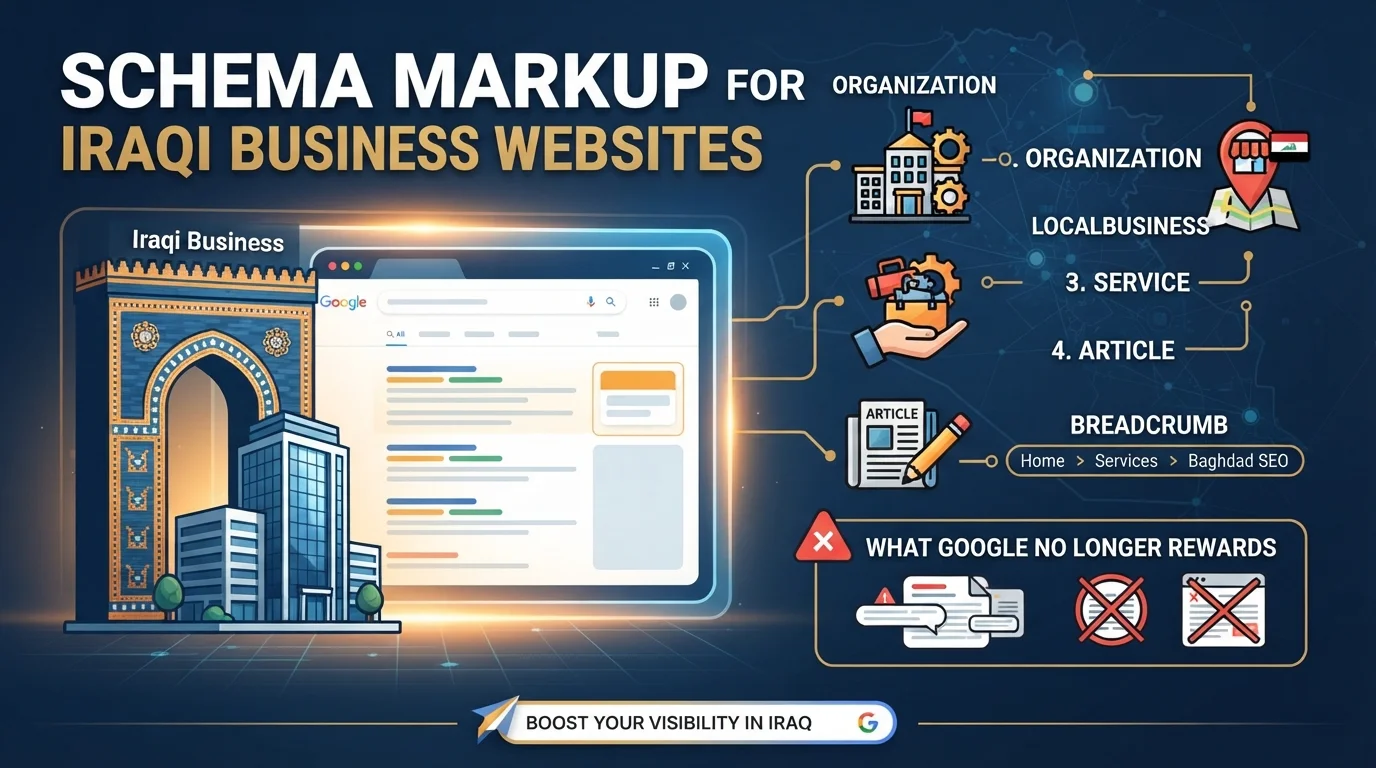
Every few months, a business owner in Iraq forwards us a message from a freelancer or plugin promising “rich snippets that will put stars next to your website in Google.” The idea is appealing: add some code, and your search listing suddenly looks bigger and more trustworthy than your competitors’. The reality is more modest, and more useful. Schema markup helps search engines understand who you are, what you offer, and how your pages relate to each other. Some types can still earn enhanced search results. Others no longer do, and some can even get you into trouble if used incorrectly.
This guide explains schema markup for Iraqi business websites in practical terms: what it does and does not do, which types matter most for local businesses, how to handle bilingual Arabic and English sites, which tactics Google no longer rewards, and how to test your implementation.
What Schema Markup Does (and Doesn’t Do)?
Schema markup, also called structured data, is code added to a web page that describes its content in a standardized vocabulary from Schema.org. It tells search engines, in machine-readable form, facts such as “this is a business called X, located in Baghdad, with this phone number and these opening hours.”
What It Helps With?
Well-implemented schema markup helps search engines interpret your content with less guesswork. It can make your pages eligible for certain enhanced results, such as breadcrumb trails, article details, or product information with price and availability. It also strengthens how search engines and AI systems understand your business as an entity, connecting your website with your social profiles, location, and services.
What It Does Not Do?
Schema markup is not a direct ranking factor that lifts a weak page above stronger competitors. It does not guarantee any rich result; Google decides whether to show enhancements based on many factors. And it cannot describe things that are not on the page. Structured data must match visible content, or it risks being ignored or treated as spam.
JSON-LD Is the Recommended Format
There are several ways to add structured data, but Google recommends JSON-LD: a block of code placed in the page that does not interfere with the visible design. Most modern SEO plugins and frameworks output JSON-LD, and it is the easiest format to maintain.
Organization and LocalBusiness Schema
For most Iraqi companies, these two types form the foundation of their schema markup.
Organization Schema
Organization markup describes your company as a whole: official name, logo, website, contact details, and links to official profiles such as Facebook, Instagram, LinkedIn, and YouTube using the sameAs property. This schema markup usually belongs on the homepage or an About page. If your business is part of a larger group, properties such as parentOrganization can express that relationship.
LocalBusiness Schema
LocalBusiness, or a more specific subtype such as Dentist, Restaurant, or ProfessionalService, describes a physical location customers can visit or contact. Include the business name, full address, phone number, opening hours, and geographic coordinates. For Iraqi businesses, write the address as customers and maps would recognize it, and make sure it matches your Google Business Profile exactly.
Consistency Matters More Than Volume
The most valuable thing about LocalBusiness schema markup is consistency. If your website footer, contact page, structured data, Google Business Profile, and directory listings all show the same name, address, and phone number, search engines can trust the information. If they disagree, for example a footer listing one city while a map points to another, structured data cannot fix the confusion. Our guide to Google Business Profile optimization explains how to keep these signals aligned.
Multiple Branches
If you have branches in several Iraqi cities, each location should have its own page with its own LocalBusiness markup, address, phone, and hours. Do not place every branch’s address in a single block of schema markup on the homepage. Separate pages with accurate details are clearer for both users and search engines.
Service and Product Schema
Beyond who you are, schema markup can describe what you sell, from services to individual products.
Service Schema
Service markup can describe the services on your service pages, such as web design, dental implants, or legal consultation, including the provider and the area served. Google does not currently offer a specific rich result for services, so the benefit is primarily clearer understanding rather than visual enhancement. Service schema markup is still worth adding on core service pages, provided it reflects the visible content.
Product Schema for Online Stores
For ecommerce sites, Product markup is one of the most valuable types of schema markup. It can include product name, image, price, currency, availability, and, where genuine, review ratings. This can make product pages eligible for richer search results and helps search engines understand your catalog. For Iraqi stores, make sure the currency and price in the markup match exactly what the page shows, and update availability when items sell out.
Keep Prices Accurate
Outdated prices in structured data are a common problem when stores change prices but the markup comes from a stale cache or plugin setting. Mismatches between markup and visible content can lead Google to ignore your schema markup or flag issues in Search Console.
Article and Breadcrumb Schema
Content-heavy sites benefit from schema markup that describes articles and site structure.
Article and BlogPosting
Article or BlogPosting markup identifies the headline, author, publication date, modified date, and featured image of a blog post. Using a real, named author with an author page supports credibility, which matters more as search engines and AI systems try to judge expertise. A generic author name such as “Admin” or “Editor” adds little.
BreadcrumbList
Breadcrumb markup describes where a page sits in your site hierarchy, for example Home, then Blog, then SEO, then the article. Google may display breadcrumbs in search results instead of the raw URL, which can make listings clearer, especially for Arabic URLs that appear as long encoded strings. Breadcrumb schema markup is simple to implement and broadly useful.
Schema Markup on Bilingual Arabic and English Sites
Many Iraqi websites run in two languages, which adds a few schema markup considerations.
Mark Up Each Language Version
Each language version of a page should carry structured data in its own language, matching its visible content. The Arabic service page should describe the service in Arabic; the English page in English. Use the inLanguage property where relevant, such as on articles.
Structured Data Is Not hreflang
Schema markup does not tell Google which page is the Arabic alternative of which English page. That job belongs to hreflang annotations. Make sure both are implemented correctly and do not contradict each other. Our technical SEO audit checklist covers hreflang checks in detail.
Keep Names Consistent Across Languages
If your company has an Arabic and an English name, include both where appropriate, for example using the alternateName property in Organization markup. This helps search engines connect the two versions of your brand.
What Google No Longer Rewards?
Some schema markup tactics that were popular a few years ago no longer deliver what many plugins and freelancers still promise.
FAQ Rich Results Are Now Very Limited
In 2023, Google restricted FAQ rich results to a small set of authoritative government and health websites. For most business sites, adding FAQPage markup no longer produces expandable FAQ results in search. The FAQ content itself remains valuable for readers and for search engines understanding the page, but do not expect visual enhancements from it.
HowTo Rich Results Were Retired?
Google also stopped showing HowTo rich results. Step-by-step content is still helpful, but HowTo markup will not change how your listing appears.
Self-Serving Review Stars
Google does not show review stars for LocalBusiness or Organization pages based on reviews the business collects and displays about itself. Adding AggregateRating markup to your homepage with your own testimonials will not earn stars and may be treated as a policy violation. Genuine review markup remains relevant in contexts such as products where reviews meet Google’s guidelines.
Markup That Does Not Match the Page
Adding schema markup for content users cannot see, such as fake ratings, hidden addresses, or services you do not describe, violates Google’s guidelines and can lead to a manual action. Only mark up what is visibly true on the page.
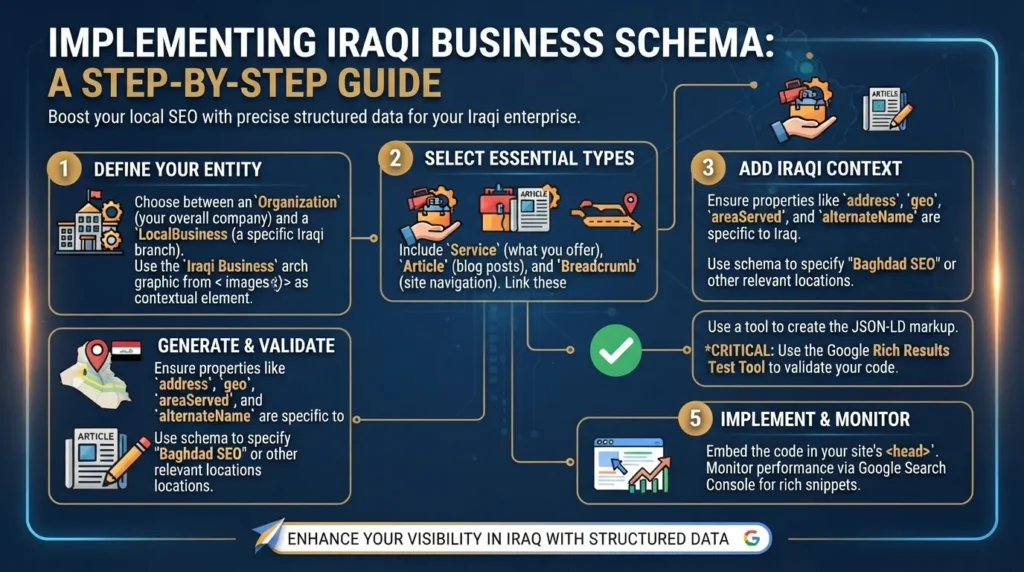
Testing Schema Markup and Fixing Common Errors
Implementing schema markup is only half the job. Testing confirms that search engines can read your markup correctly.
Use Google’s Testing Tools
Google’s Rich Results Test shows whether a page is eligible for supported rich results and flags errors. The Schema Markup Validator checks general Schema.org syntax. After deployment, Search Console reports structured data issues across your site, so check the Enhancements section regularly.
Common Errors on Iraqi Sites
Typical problems include duplicate markup from multiple plugins, missing required properties, addresses that differ from the visible footer, broken image URLs, and outdated prices or opening hours. Arabic text can also break if the encoding is wrong, so test Arabic pages specifically.
Review After Every Major Change
Theme changes, plugin updates, migrations, and redesigns can remove or duplicate structured data without anyone noticing. Include schema markup checks in your launch checklist and periodic technical audits.
A Simple Schema Markup Starter Plan
If you are starting from scratch, this order covers the essentials for most Iraqi business websites:
- Organization markup on the homepage, with logo, contact details, and sameAs profile links.
- LocalBusiness markup on contact or branch pages, matching your Google Business Profile exactly.
- BreadcrumbList across the site, and Article markup with real authors on blog posts.
- Product markup for ecommerce, or Service markup on core service pages.
Add more specialized schema markup types only when they match your content and serve a clear purpose. If you want help prioritizing, our SEO services in Iraq include structured data audits.
Frequently Asked Questions About Schema Markup
Not directly. It helps search engines understand your content and can make pages eligible for enhanced results, which may improve click-through rates, but it does not replace good content and technical SEO.
You can, but most business sites will not see FAQ rich results since Google’s 2023 restrictions. Keep FAQ sections for readers; treat the markup as optional.
Not with self-collected reviews about your own business. Google does not show those stars for LocalBusiness or Organization pages, and misleading markup can cause problems.
Many SEO plugins add basic schema markup automatically. Custom types, multi-branch setups, and bilingual sites often benefit from developer or SEO specialist involvement to avoid duplication and errors.
Add Structured Data That Tells the Truth
Good schema markup is clear, accurate, and matched to what visitors see. For Iraqi businesses, that means consistent Organization and LocalBusiness details, breadcrumbs, articles with real authors, and product or service markup where relevant, while skipping outdated tactics that no longer earn results.
If you are unsure what your site’s structured data says about your business, Creative 4 All can audit and fix it as part of a wider technical review. Explore our SEO services in Iraq, read our guide to local SEO in Iraq, or request an SEO audit today.