Walk down Karrada or through a shopping street in Erbil and count how many shops sell almost the same thing. Phones, furniture, cosmetics, clothing, clinics, restaurants. Many of them have decent products and fair prices. Yet customers walk past most of them and queue at a few. Location helps, and so does word of mouth, but there is something else at work: those few businesses are easy to recognize, easy to remember, and easy to trust. That is what branding does when it is done properly, and for Iraqi companies competing in crowded markets, it is rarely a luxury.
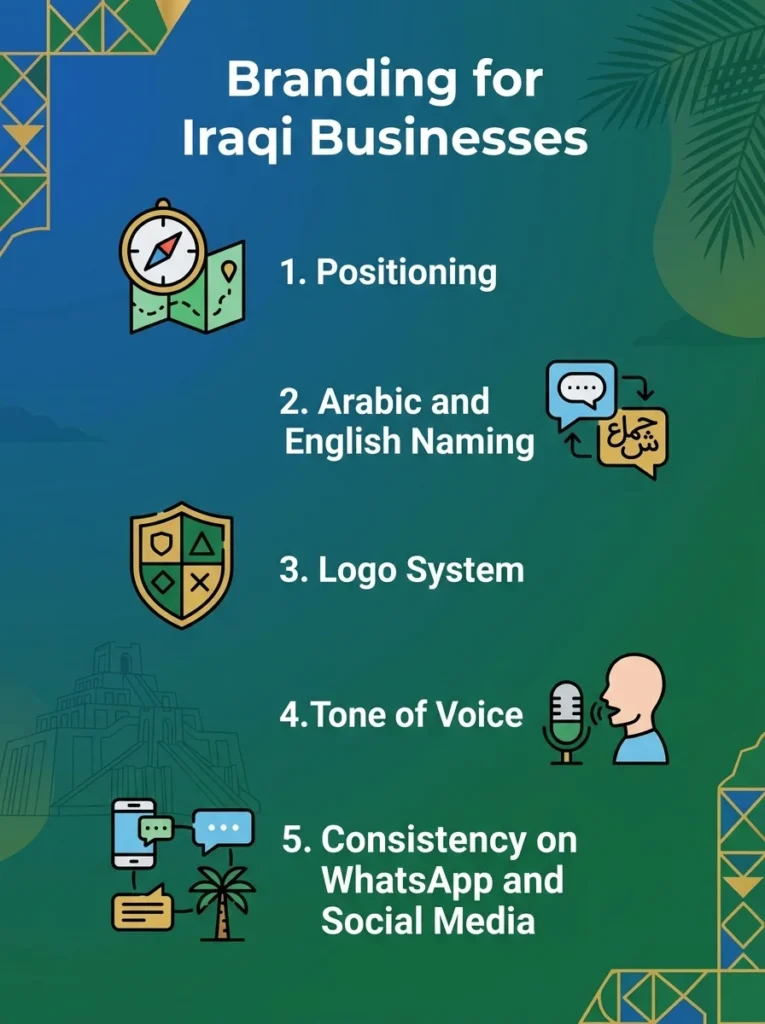
This guide explains branding for Iraqi businesses in practical terms: how it differs from a logo, how to position your company in a busy market, how to handle Arabic and English names, what a complete visual identity includes, how to keep your voice consistent across social media and WhatsApp, and what to plan for when budgeting a branding project.
Branding vs a Logo: Understanding the Difference
Many business owners in Iraq start with a request for “a logo.” That is understandable, because the logo is the most visible part of a brand. But a logo is a symbol. Branding is the whole system of decisions that tells people who you are, who you serve, why you are different, and what to expect when they deal with you.
What Branding Actually Includes?
A complete branding process usually covers positioning (what you stand for and for whom), naming, a visual identity (logo, colors, typography, imagery style), a tone of voice, and guidelines that keep everything consistent. It also touches customer experience: how your staff answer the phone, how quickly WhatsApp messages get a reply, how your delivery packaging looks. Customers form their impression of a brand from all of these moments, not just from a logo on a sign.
Why a Logo Alone Rarely Works?
A beautiful logo attached to a vague message, inconsistent colors, and a different look on every social post does not build recognition. It creates confusion. We often see Iraqi businesses that paid for a logo, then used three versions of it, two different color palettes, and whichever font the designer of the week preferred. The investment is lost because nothing ties the pieces together. Good branding is the glue.
Brand Positioning in a Crowded Iraqi Market
Positioning answers a simple question: why should a customer choose you instead of the shop next door or the competitor that appears above you on Instagram? If you cannot answer it in one sentence, your customers cannot either.
Find a Clear, Honest Difference
The strongest positioning is specific and true. “The best quality” is not a position, because everyone claims it. “Same-day delivery across Baghdad,” “furniture made to order in Najaf,” or “the only clinic in the area with evening specialist appointments” are positions. They give customers a reason to remember you. Effective branding starts by finding that difference and expressing it clearly, not by inventing one.
Know Exactly Who You Serve
Trying to appeal to everyone usually means appealing to no one in particular. A brand for young professionals in Erbil will look and sound different from a brand for families shopping for household goods in Basra, or for procurement managers in the oil and gas sector. Defining your core customer shapes every later branding decision, from colors to the platforms you invest in.
Look Honestly at Competitors
Before designing anything, study the businesses your customers compare you with. Note their colors, names, claims, and tone. If every competitor in your sector uses blue and the word “premium,” a confident alternative helps you stand out. Branding is partly about fitting customer expectations for your category and partly about being distinct within it.
Arabic and English Brand Names
Naming is one of the most underestimated parts of branding in Iraq, because most businesses need to work in at least two languages, and some in three.
Choosing a Name That Works in Both Languages
A good name should be easy to say, easy to spell, and easy to search in Arabic and in English. Test how it sounds when spoken quickly, how it looks in both scripts, and whether the English transliteration has more than one common spelling. If customers can spell your name three ways, some of them will fail to find you on Google or Instagram.
Check Meanings, Associations, and Availability
Check that the name carries no unintended meaning in Arabic, Kurdish, or English. Then check availability: the domain (.iq and .com), Instagram, Facebook, TikTok, and WhatsApp Business display name. Finally, speak to a local lawyer about trademark registration with the competent Iraqi authority before investing heavily in signage and packaging. These checks feel administrative, but skipping them can force an expensive rebrand later.
When to Keep Separate Arabic and English Names?
Some businesses use a single name in both scripts; others use an Arabic name for local customers and an English name for international partners. Either can work, but the visual branding must make it obvious they are the same company. A shared symbol, the same colors, and a consistent layout help customers connect the two.
Building a Complete Visual Identity System
Once positioning and naming are clear, visual branding turns them into something people can see.
Logo Versions, Not Just One Logo
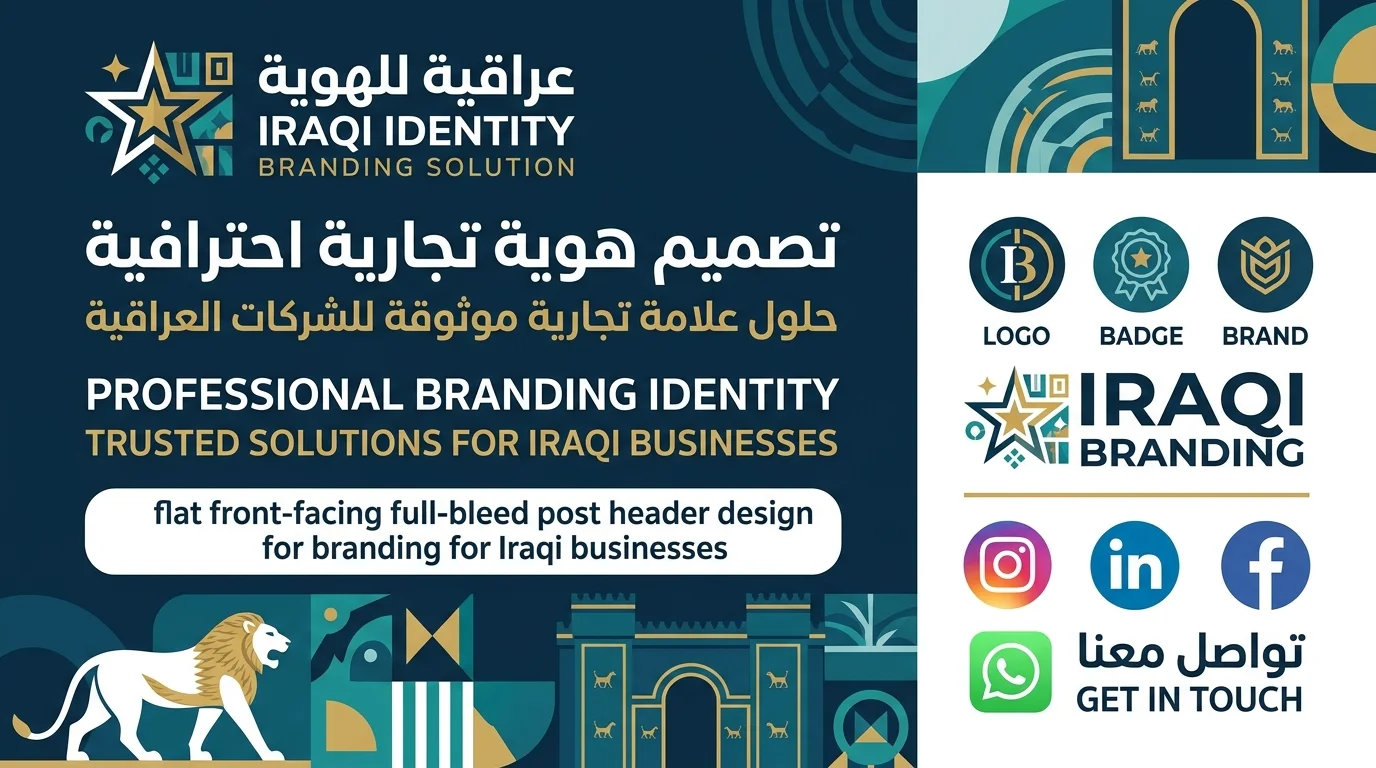
A professional identity includes several logo versions: a primary logo, a simplified version for small sizes such as WhatsApp profile pictures and app icons, a horizontal version for website headers, and single-color versions for stamps, embroidery, or printing on packaging. Without these, staff and printers improvise, and the brand starts to drift.
Colors and Typography for Arabic and English
Choose a small, defined color palette with exact color codes for screen and print. Typography needs special care in Iraq: select an Arabic font and an English font that look like they belong together, both readable on small phone screens. Many identities fail here, pairing a modern English font with an Arabic font that feels decades older. Our article on bilingual website design covers how these choices carry over to your website.
Imagery and Templates
Decide what kind of photos and graphics represent you: real photos of your team and premises, product photography on a consistent background, or illustration. Then create templates for the content you produce most often, such as Instagram posts, stories, price lists, and offers. Templates are one of the most practical branding investments, because they make consistency the easy option for whoever designs your weekly posts.
Brand Voice Across Social Media and WhatsApp
Your brand speaks every day, in captions, replies, comments, and chats. Voice is the part of branding that customers experience most often and businesses plan least.
Define How You Sound
Is your company formal or friendly, playful or calm, technical or simple? Write a short description with examples of phrases you use and phrases you avoid. Decide when to use Modern Standard Arabic and when Iraqi dialect fits better. Many brands use clear MSA for websites and formal documents and a lighter, more conversational tone on Instagram and TikTok. Both can work, as long as the choice is deliberate.
Make WhatsApp Part of the Brand
For many Iraqi customers, the WhatsApp conversation is the most personal contact they have with your company. Greeting messages, quick replies, response times, and the way staff handle complaints all shape perception. Include WhatsApp in your branding guidelines: profile photo, description, standard replies, and tone. A polished Instagram feed followed by a careless chat undoes the impression.
Consistency Builds Trust Over Time
Recognition comes from repetition. When your colors, tone, and promises stay the same across your shop sign, website, Instagram, and WhatsApp, customers begin to trust you before they buy. When every channel looks and sounds different, they hesitate. Consistency is not glamorous, but it is where branding pays off.
What a Branding Project Costs to Plan For?
Prices for branding in Iraq vary widely, from a freelance logo at a very low price to full agency projects. Instead of quoting figures that would not fit every case, it is more useful to understand what drives the cost.
The Main Cost Drivers
The scope of work matters most: a logo only, a visual identity, or full strategy including research, positioning, and naming. The number of concepts and revision rounds, the deliverables (logo files, guidelines document, templates, stationery, signage designs), the number of languages, and whether you receive full usage rights all affect the price. A project that includes Arabic and English typography and a written brand guide will cost more than a single logo, and it should.
What to Ask Before You Hire?
Ask what exactly you will receive, in which file formats, and who owns the final files. Ask to see complete identity projects, not just logos. Ask how the designer handles Arabic typography. Low-cost offers often deliver one logo file and nothing else, which is why many businesses end up paying twice. If you are mainly comparing logo quotes, our upcoming guide to logo design costs in Iraq goes into more detail.
When to Invest in Full Branding?
Full branding makes the most sense when you are launching a new company, entering a new market such as moving from Baghdad into the Kurdistan Region, preparing to grow through new branches or franchising, or when your current identity no longer reflects what the business has become. If your company is small and early, a well-made visual identity with clear guidelines is often a sensible first step, with deeper strategy work later.
How Branding Supports Your Website and Marketing?
Branding is not separate from marketing; it makes every marketing activity more effective. A recognizable brand earns more clicks in search results, more engagement on social media, and more trust when people land on your website. It also makes advertising cheaper over time, because people who already recognize you respond more readily to your ads.
That is why we recommend aligning branding with your digital plans from the start: the website, social templates, ad creatives, and WhatsApp profile should all launch with the same identity. Our guide to building a digital strategy roadmap for Iraqi businesses shows how these pieces fit together over the first year.
Frequently Asked Questions About Branding
How long does a branding project take?
A visual identity project typically takes several weeks, depending on research, the number of concepts, and how quickly decisions are made. Full branding with strategy and naming takes longer. The biggest delays usually come from unclear approvals rather than design work.
Can a small business in Iraq afford proper branding?
Yes, if the scope matches the stage of the business. A focused identity with a logo system, colors, Arabic and English typography, and a few templates is achievable for many small businesses and prevents costly inconsistency later.
Should my branding be in Arabic, English, or both?
Most Iraqi businesses need both. The balance depends on your customers: consumer brands usually lead with Arabic, while B2B companies working with international partners often need strong English materials too. Some companies in the Kurdistan Region also need Kurdish.
When should I rebrand?
Consider rebranding when your identity no longer matches your offer, when you are entering new markets, when your name causes confusion, or when your visual identity looks outdated compared with competitors. A refresh of colors and typography is often enough; a full rebrand is a larger decision.
Build a Brand Customers Remember
Strong branding helps Iraqi businesses stand out in crowded markets, earn trust faster, and make every marketing dinar work harder. It starts with honest positioning, a name that works in Arabic and English, a complete visual identity, and a consistent voice across your website, social media, and WhatsApp.
If you are launching a business or your current identity no longer fits, Creative 4 All can help you plan the right branding scope for your stage. Explore our graphic design services in Iraq, see how identity carries into web design and development, or request a consultation to talk through your brand.