
Ask five different marketing providers to define SEM, and there’s a real chance you’ll get three different answers — some using it interchangeably with PPC, others treating it as a synonym for SEO, and a few using it correctly as the umbrella term it’s actually meant to be. This confusion around SEM vs SEO isn’t just an academic distinction; it genuinely affects what a business owner thinks they’re buying when a provider proposes “SEM services” without clarifying what’s actually included.
This guide clears up the confusion directly: what SEM actually means as a term, exactly how it relates to both SEO and PPC, when a business genuinely needs the full SEM approach rather than just one component, a simple framework for deciding what your specific situation calls for, and how a properly structured SEM campaign actually integrates these pieces together. By the end, the SEM vs SEO distinction should feel less like jargon and more like a genuinely useful way to evaluate what you’re actually being offered.
Defining SEM Clearly
What SEM Actually Means?
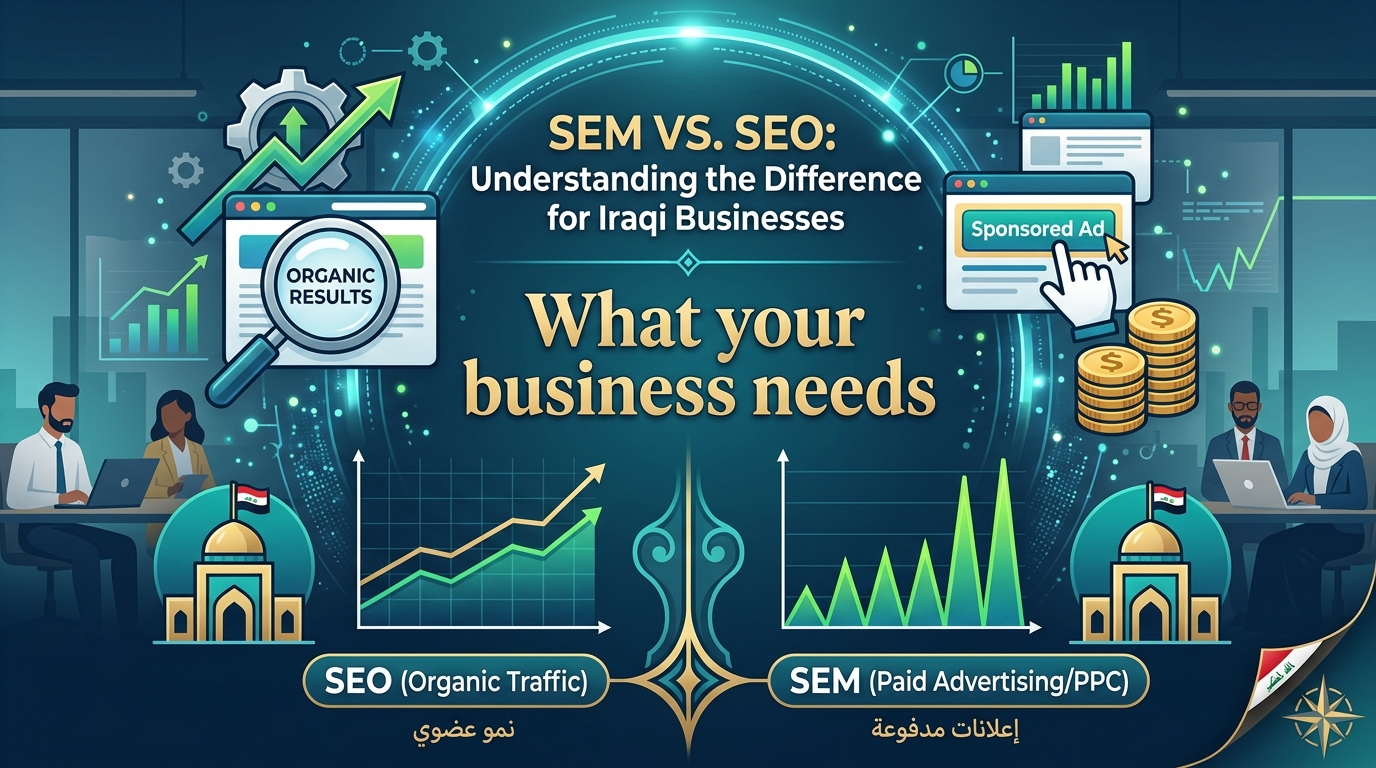
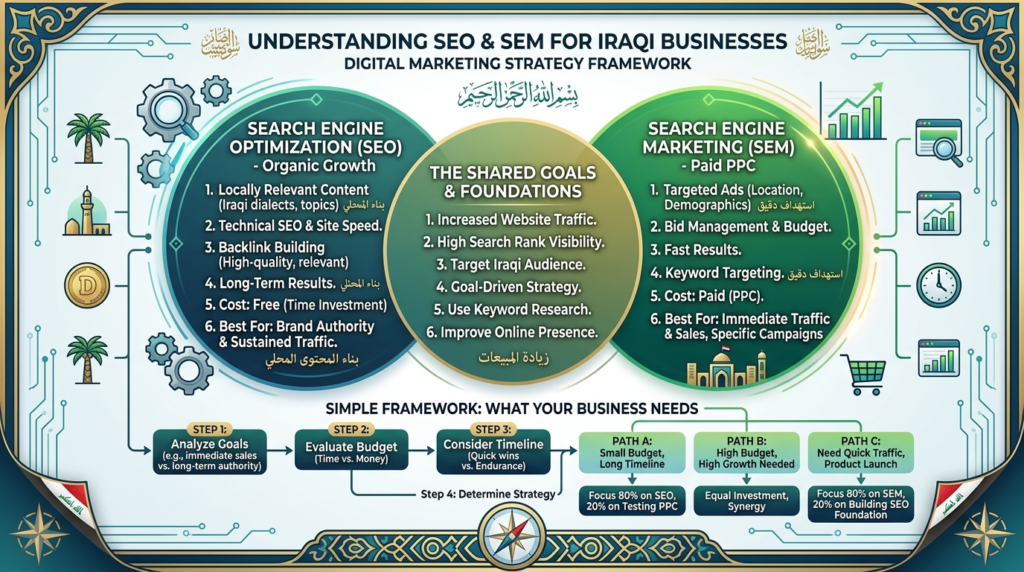
Search Engine Marketing (SEM) is the umbrella term covering all efforts to increase a website’s visibility in search engine results — both organic (unpaid) visibility and paid advertising. Under this original, technically correct definition, SEO and PPC aren’t competing alternatives to SEM; they’re the two main components that make it up.
Why the Term Gets Misused So Often?
Over time, informal usage has drifted, with many people using “SEM” as a casual shorthand specifically for paid search advertising, effectively treating it as a synonym for PPC rather than the broader umbrella term it actually is. This drift is common enough that it’s worth clarifying explicitly in any conversation with a provider, since assuming shared understanding of the term can lead to real confusion about scope.
Why This Distinction Actually Matters?
If a business owner believes “SEM” means paid advertising and a provider is using it correctly as an umbrella term including organic SEO work, both parties might believe they’re aligned on what’s included in a proposal when they’re actually describing different scopes of work entirely — a genuinely costly miscommunication if left unclarified.
A Practical Example of the Confusion
Consider an Iraqi business owner who requests “SEM services” from an agency, intending to mean paid advertising specifically. The agency, using the term correctly as an umbrella, proposes a package including both SEO content work and PPC management. Because neither side explicitly clarified their definition upfront, the business owner is surprised to see a significant portion of the proposed budget allocated to content and technical SEO work rather than ad spend, leading to a frustrating conversation that proper terminology clarification at the outset would have avoided entirely.
How SEM Relates to SEO and PPC?
SEO: The Organic Component
Search engine optimization builds visibility in unpaid, organic search results through content quality, technical site health, and authority signals — a slower-building but more durable form of search visibility that doesn’t require ongoing per-click payment once rankings are established.
PPC: The Paid Component
Pay-per-click advertising buys immediate visibility in search results through a bidding auction, delivering fast results but requiring continuous spend to maintain that visibility. Unlike SEO, PPC visibility disappears essentially immediately once spending stops.
Is SEM the Same as PPC?
Is SEM the same as PPC is one of the most common points of confusion, and the accurate answer is no — PPC is one component of SEM, not a synonym for it. A genuine SEM strategy considers both organic and paid search together as complementary parts of one coordinated approach to search visibility, not a single tactic wearing two names.
When Businesses Need Full SEM?
Businesses Benefiting From a Combined Approach
A business competing in a genuinely competitive market, needing both immediate visibility (through PPC) and durable long-term presence (through SEO), benefits from a coordinated SEM strategy that treats both channels as working toward the same overall visibility goal rather than managing them as entirely separate initiatives.
When One Component Alone Might Suffice?
A business with limited budget and a longer time horizon might reasonably prioritize SEO alone initially, while a business needing extremely fast results for a time-sensitive campaign might lean primarily on PPC. Full, coordinated SEM makes the most sense once a business has the resources and goals to pursue both channels together deliberately.
Signals You’d Benefit From an Integrated Strategy
If PPC campaign data is revealing valuable keyword insights that aren’t informing SEO content strategy, or if SEO content isn’t being reinforced by targeted PPC campaigns for high-value terms, these are signals that treating the two as genuinely coordinated SEM would likely outperform running them as disconnected efforts.
The Cost of Running Them Disconnected
A business running SEO and PPC through separate providers, or even separate teams within the same agency with no real communication between them, often misses the compounding value each channel could offer the other. PPC search term reports reveal exactly which phrases real customers use, information that should directly shape SEO content topics; meanwhile, strong organic content can improve the quality score of related PPC ads, reducing cost-per-click. Treating SEO and PPC as genuinely coordinated SEM, rather than two vendors sharing an invoice, is where this compounding value actually gets captured.
A Simple Decision Framework
Questions to Ask Yourself
Does your business need visibility immediately, or can you invest in a longer-term, more durable approach? Do you have budget to sustain both organic content investment and ongoing paid spend simultaneously? Is your market competitive enough that a single channel alone likely won’t capture sufficient visibility?
Matching Approach to Business Reality
A newly launched business with limited runway often benefits from PPC’s immediate visibility while SEO builds in parallel; an established business with existing organic visibility might prioritize deepening SEO while using PPC more surgically for specific high-value opportunities. There’s no universally correct SEM composition — only the mix that matches your specific situation.
A Quick Terminology Checklist
- Confirm explicitly what a provider means by “SEM” before assuming shared understanding.
- Ask whether a proposed SEM strategy includes both SEO and PPC, or primarily one component.
- Clarify how organic and paid efforts will be coordinated, not just run in parallel.
- Ensure reporting distinguishes organic and paid contributions clearly, not blended together.
How Creative 4 All Structures SEM Campaigns?
Genuine Coordination, Not Just Shared Branding
A properly structured SEM approach coordinates SEO and PPC as genuinely complementary efforts — PPC data informing content priorities, SEO content strengthening the pages PPC campaigns eventually send traffic to, and reporting that clearly shows how each channel contributes to overall visibility rather than blending results into a single ambiguous metric.
Building the Right Mix for Your Business
Creative 4 All builds SEM services Iraq businesses can rely on around your specific goals and budget, coordinating SEO and PPC advertising as one genuinely integrated strategy rather than two disconnected services sharing a proposal document.
Read More on the Digital Marketing Blog — or subscribe for future insights on building an effective, coordinated search visibility strategy.
FAQs
No. SEM is the umbrella term covering both organic SEO and paid PPC efforts to increase search visibility. Using SEM as a synonym for PPC alone is common informal usage, but it’s technically incorrect.
A genuine, complete SEM strategy includes both, but a business can reasonably prioritize one component based on budget and timeline while still working toward eventually coordinating both.
Because SEM includes SEO as one of its two main components, and informal usage has drifted over time, with SEM sometimes used loosely to mean either paid advertising specifically or search marketing generally, creating genuine ambiguity in casual conversation.
Consider your timeline (immediate visibility favors PPC, long-term durability favors SEO), budget (sustaining both simultaneously requires more resources), and competitiveness (highly competitive markets often benefit from a coordinated approach using both).
Ask them to explicitly clarify whether their SEM service includes both SEO and PPC work, how the two will be coordinated rather than run separately, and how reporting will distinguish the contribution of each channel.