
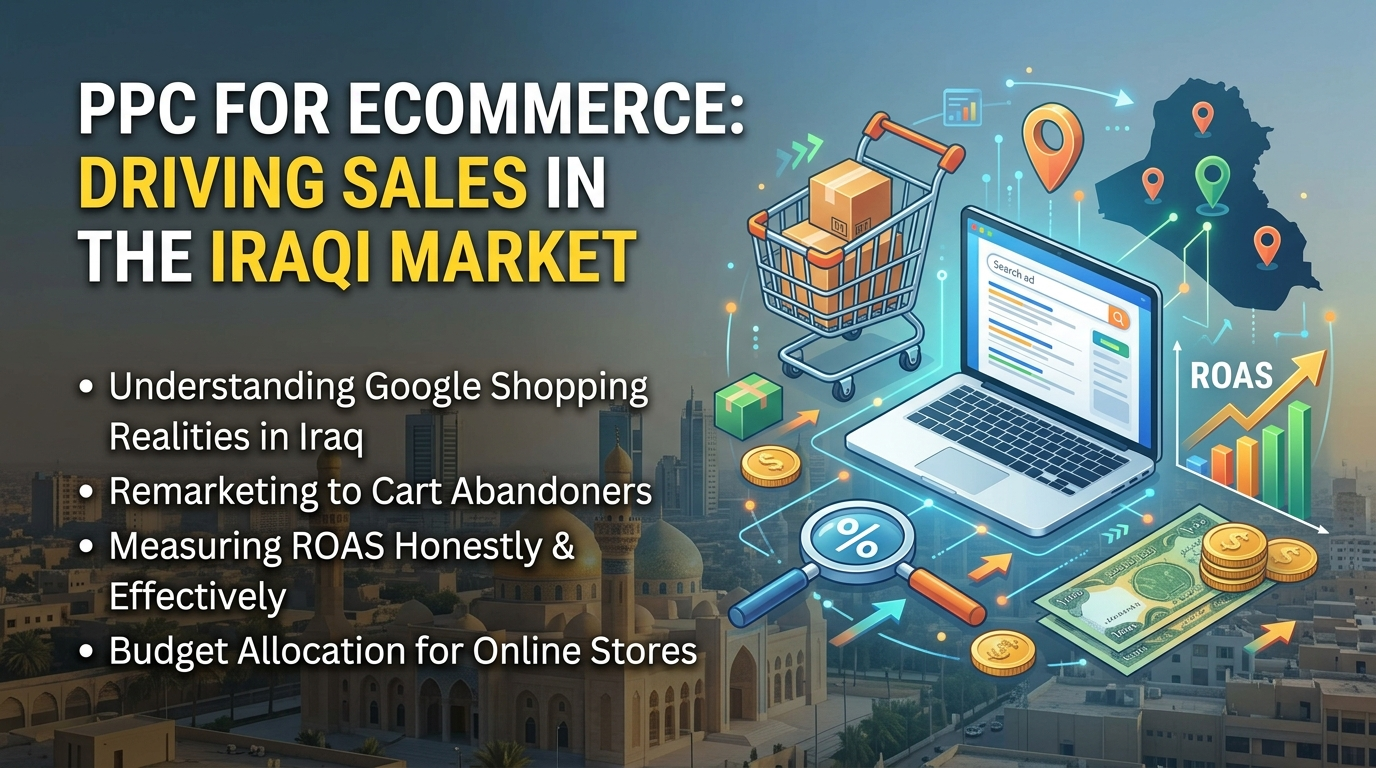
Standard search advertising and ecommerce advertising aren’t the same discipline, even though both run through the same Google Ads platform. PPC for ecommerce Iraq stores need has to account for product-level targeting, remarketing to shoppers who browsed but didn’t buy, and revenue-based measurement — considerations that a typical service-business PPC campaign simply doesn’t have to think about.
This guide covers how PPC specifically serves ecommerce goals, what Google Shopping realistically offers Iraqi online stores right now, how to build effective remarketing campaigns targeting cart abandoners, how to measure return on ad spend honestly, and how to allocate a limited advertising budget across the different types of ecommerce campaigns that matter. If you’re running or planning ads for an online store specifically, this guide is built around the considerations unique to selling products, not just generating leads.
Why PPC Matters for Ecommerce Growth?
Capturing High-Intent Purchase Searches
Someone searching a specific product name or category is often close to a purchase decision, making PPC particularly valuable for ecommerce — it captures this high-intent traffic at the exact moment of purchase consideration, rather than relying entirely on organic visibility that takes months to build for competitive product terms.
Complementing, Not Replacing, Organic Ecommerce SEO
PPC and SEO serve ecommerce differently: SEO builds durable, ongoing visibility for product and category searches without continuous per-click cost, while PPC provides immediate visibility and can be turned toward new products or seasonal promotions instantly, something organic rankings can’t do on demand. A mature ecommerce marketing approach uses both together deliberately rather than treating them as competing options for the same budget.
Seasonal Campaign Flexibility
One of PPC’s genuine advantages for ecommerce specifically is the ability to launch, pause, and adjust campaigns instantly around seasonal demand — a promotion tied to a specific holiday or shopping period can be built and running within a day, while organic SEO content for the same seasonal opportunity would need to have been built weeks or months in advance to rank in time. This flexibility makes PPC a natural complement to SEO’s slower-building, more durable presence.
Ecommerce Advertising’s Direct Revenue Connection
Unlike many PPC campaigns measuring success through leads or inquiries, ecommerce advertising connects directly to trackable revenue — every ad click can be followed through to an actual completed purchase and its dollar value, making ecommerce PPC one of the more directly measurable forms of paid advertising available.
Google Shopping Campaigns Explained
What Google Shopping Ads Actually Are?
Google Shopping ads display product images, prices, and store names directly within search results, driven by a product feed submitted through Google Merchant Center rather than manually written ad copy. This visual, product-forward format often performs differently than standard text ads for product searches.
An Important Availability Caveat for Iraqi Merchants
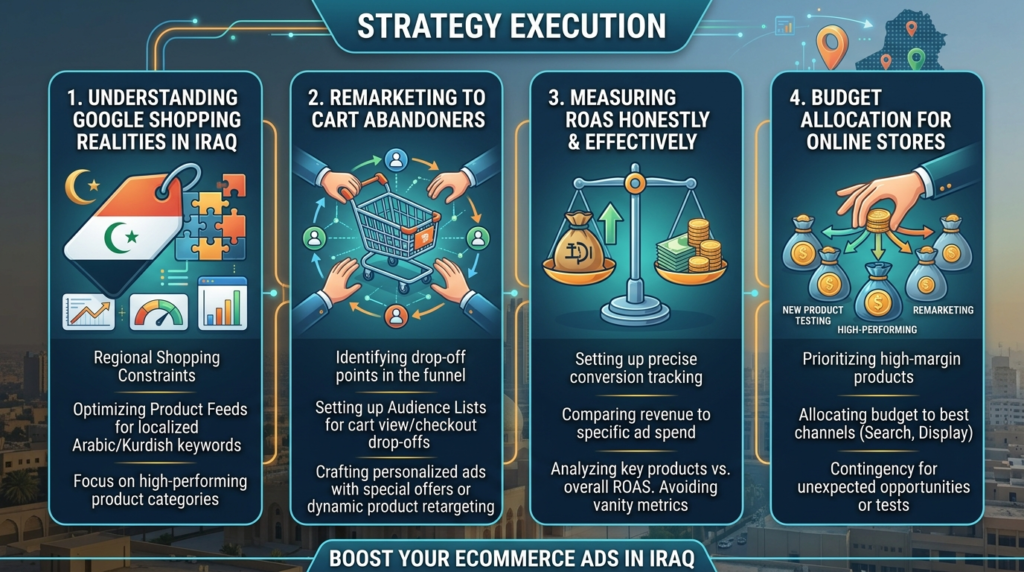
Google Merchant Center’s supported countries for Shopping ads specifically are managed separately from Google’s general advertising availability, and this list changes periodically. Before building a strategy around Google Shopping Ads Iraq merchants might assume is available, verify current Merchant Center country support directly in your account setup, since standard Google Ads search and display campaigns and Shopping-specific campaigns aren’t governed by identical availability rules.
Alternatives While Confirming Shopping Availability
Regardless of Shopping ads’ specific status at any given time, standard search and display campaigns remain a reliable, well-established way to advertise ecommerce products in Iraq, using strong product imagery and pricing information directly within traditional text ad extensions rather than the dedicated Shopping feed format.
Remarketing to Cart Abandoners
Why Cart Abandonment Recovery Matters So Much?
A significant share of shoppers who add items to cart don’t complete the purchase in that same session, making remarketing — showing ads specifically to people who already visited your site or added items to cart — one of the highest-value ecommerce PPC tactics, since it targets an audience that has already demonstrated real purchase interest.
A Practical Example of Remarketing’s Value
Consider an Iraqi home goods store running acquisition-only PPC, driving visitors to product pages without any remarketing follow-up. Many visitors who add a product to cart but get interrupted — a phone call, a WhatsApp message, simply closing the tab — never return to complete the purchase, representing lost revenue from customers who had already shown genuine buying intent. Adding a remarketing campaign specifically targeting these cart abandoners, with ads reminding them of the exact product they were considering, recovers a meaningful share of these otherwise lost sales at a lower cost per acquisition than pure top-of-funnel advertising, since the audience is already partway through the purchase decision rather than starting from scratch.
Setting Up Effective Remarketing Audiences
Effective remarketing distinguishes between different visitor behaviors — someone who abandoned a cart deserves different messaging than someone who simply browsed a product page, and someone who completed a purchase belongs in a different audience entirely for future promotions rather than being re-targeted with acquisition messaging.
Timing and Frequency Considerations
Remarketing ads shown too aggressively or for too long after a visit can feel intrusive rather than helpful, while ads timed appropriately — often within the first few days after abandonment, with sensible frequency caps — recover a meaningful share of otherwise lost sales without damaging brand perception.
Measuring ROAS
What ROAS Actually Measures?
Return on ad spend (ROAS) measures revenue generated for every unit of advertising spend, providing a genuinely direct measure of ecommerce PPC performance that clicks or impressions alone can’t offer, since it connects spend directly to actual sales revenue rather than intermediate engagement metrics.
Why This Guide Won’t Suggest a Target ROAS Figure?
A “good” ROAS varies enormously by profit margin, average order value, and business goals — a business with thin margins needs a much higher ROAS to be profitable than one with substantial margin per sale, making any single suggested target figure potentially misleading rather than genuinely useful across different Iraqi ecommerce categories.
Calculating Your Own Meaningful ROAS Target
Rather than adopting a generic target, calculate the ROAS your specific business actually needs to be profitable based on your margin structure, then evaluate campaign performance against that number specifically, adjusting bids and targeting toward products and campaigns that meet or exceed it.
Budget Allocation for Ecommerce Ads
Balancing Acquisition and Remarketing Spend
A reasonable ecommerce PPC budget typically allocates meaningful spend to both new customer acquisition campaigns and remarketing to existing site visitors, since remarketing often delivers a stronger ROAS due to targeting an already-interested audience, while acquisition campaigns remain necessary to keep growing that audience in the first place.
A Quick Ecommerce PPC Checklist
- Confirm current Merchant Center availability directly before committing strategy to Shopping ads specifically.
- Set up remarketing audiences distinguishing cart abandoners from general browsers.
- Calculate your specific required ROAS based on actual margin, not a generic industry figure.
- Allocate budget across both acquisition and remarketing rather than concentrating on one exclusively.
Creative 4 All builds PPC for online stores matched to genuine Iraqi ecommerce realities, coordinated with our ecommerce team to build advertising strategy that connects directly to your store’s actual revenue goals.
Request a Free Audit to get an honest assessment of which ecommerce PPC approach would actually work for your specific store and margins.
FAQs
Merchant Center’s supported countries for Shopping ads specifically are managed separately from general Google Ads availability and change periodically, so this should be verified directly in your Merchant Center account rather than assumed either way.
Ecommerce PPC typically involves product-level targeting, remarketing to cart abandoners, and revenue-based measurement through ROAS, while service business PPC usually measures success through leads or inquiries rather than trackable purchase revenue.
There’s no universal split, but remarketing often delivers stronger ROAS since it targets already-interested visitors, making it reasonable to allocate meaningful budget there alongside continued acquisition spend to keep growing your audience.
It depends entirely on your profit margin and average order value — calculate the specific ROAS your business needs to be profitable rather than adopting a generic industry benchmark that may not reflect your actual margin structure.
Yes. Standard search and display campaigns using strong product imagery and pricing within text ad extensions remain effective for ecommerce advertising, regardless of Shopping ads’ specific availability status at any given time.