
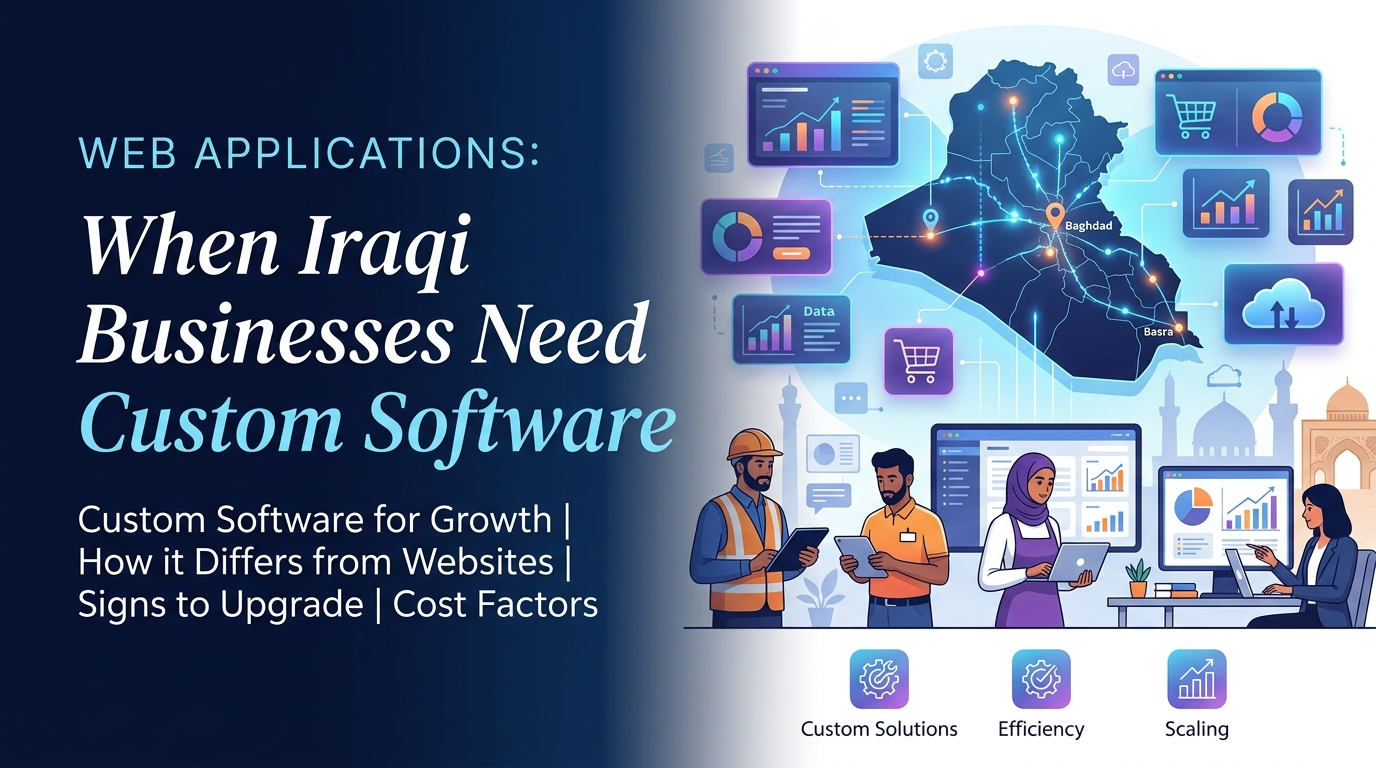
“We need a website” and “we need a web application” get used interchangeably by many Iraqi business owners, but they describe fundamentally different projects with different costs, timelines, and purposes. Web applications Iraq businesses occasionally need — an internal inventory system, a customer portal, a booking platform with complex logic — solve problems a standard website simply isn’t built to handle, and confusing the two leads either to overpaying for a website with unnecessary complexity, or underbuilding a project that genuinely needed custom software from the start.
This guide draws a clear line between a website and a web application, walks through the concrete signs that indicate custom software is actually the right call, covers the most common use cases among Iraqi businesses, explains what the development process and realistic timeline actually look like, and addresses the cost factors that make this category of project different from a typical website build. If you’re an operations or IT manager trying to scope a new digital project, this guide is built to help you name what you actually need before requesting quotes.
Website vs Web Application: The Real Difference
What a Website Is Built to Do?
A website — even a sophisticated one with a blog, service pages, and contact forms — is primarily built to present information and capture inquiries. Its core job is communication: telling visitors what a business does and making it easy to get in touch, generally for an audience of external visitors rather than internal staff performing complex workflows.
What a Web Application Actually Is?
A web application is software accessed through a browser that performs specific functional tasks — processing data, managing workflows, handling user accounts with different permission levels, running business logic that goes beyond displaying content. Web app development projects are closer to building custom business software than building a marketing site, even though both are accessed the same way, through a web browser.
Why the Line Gets Blurry in Practice?
Ecommerce sites, sites with user accounts, and sites with interactive tools sit somewhere between the two categories, which is exactly why the distinction matters: understanding whether a specific feature genuinely requires application-level functionality, or whether it can be handled by a website platform with the right plugins, determines whether a project needs custom software development or a well-built website.
A Practical Example of the Distinction
Consider a Baghdad-based equipment rental company evaluating a new digital project. If the goal is simply to list available equipment and let customers submit an inquiry, a well-built website handles that comfortably. But if the actual need is real-time availability tracking across multiple locations, automated booking confirmations, staff scheduling that updates dynamically as bookings come in, and a customer login showing personalized rental history — that combination of interconnected, real-time functionality is squarely web applications Iraq businesses in this situation genuinely need, not a website feature that can be bolted on with a plugin.
Signs You Need Custom Software
Your Business Logic Doesn’t Fit a Standard Platform
If a business process involves multiple steps, conditional logic, or calculations that a standard website platform and its plugins can’t handle cleanly, that’s a strong signal a web application is the right category of solution rather than trying to force a website platform to do something it wasn’t designed for.
You Need Different User Roles With Different Permissions
A system where different types of users — customers, staff, administrators — need distinct views and capabilities within the same platform typically requires application-level user management that goes beyond what a standard website’s simple login functionality offers.
You’re Managing Complex, Interconnected Data
If a business needs to track relationships between multiple types of data — customers, orders, inventory, staff schedules — in ways that need to update and interact with each other in real time, this kind of interconnected data management is a core web application capability, not something a content-focused website handles well.
A Quick Signs Checklist
- The system needs to perform calculations or multi-step logic beyond simple content display.
- Different user types need distinct permissions and views within the same system.
- Multiple types of data need to interact and update each other in real time.
- The tool is meant for internal staff or logged-in customers, not general public browsing.
Common Use Cases for Iraqi Businesses
Internal Tools and Operations Systems
Inventory management systems, staff scheduling tools, and internal reporting dashboards are common web application use cases that help Iraqi businesses manage operations more efficiently than spreadsheets or manual processes allow, particularly as a business grows beyond what informal tracking methods can handle.
Customer Portals and Booking Systems
Businesses offering appointment-based services, equipment rental, or ongoing client relationships often benefit from a customer portal or booking system with logic more sophisticated than a standard contact form — real-time availability checking, automated confirmations, and account-based history tracking.
Custom Ecommerce and Marketplace Functionality
While standard ecommerce platforms handle most retail needs well, businesses with unusual product configuration requirements, multi-vendor marketplace functionality, or complex pricing logic sometimes need custom web applications Iraq development to support functionality a standard ecommerce platform doesn’t accommodate.
Development Process & Timeline
Why Web Applications Take Longer Than Websites?
Web application development typically involves more extensive planning, custom database design, and thorough testing of business logic and user permissions — all of which takes meaningfully longer than building a content-focused website, even a well-designed one. Realistic timeline expectations should reflect this difference from the outset.
A Realistic Development Sequence
Most web application projects move through requirements gathering and technical planning, followed by design of both the user interface and underlying data structure, then development in stages with regular testing, and finally a period of user testing and refinement before full launch — a more involved sequence than a typical website project, reflecting the greater complexity of what’s being built.
Planning for Ongoing Development
Unlike a website that’s largely complete at launch with occasional content updates, a web application often continues evolving after launch as real usage reveals refinements needed or new functionality becomes necessary. Budgeting for this ongoing development, not just the initial build, is part of realistic web application planning.
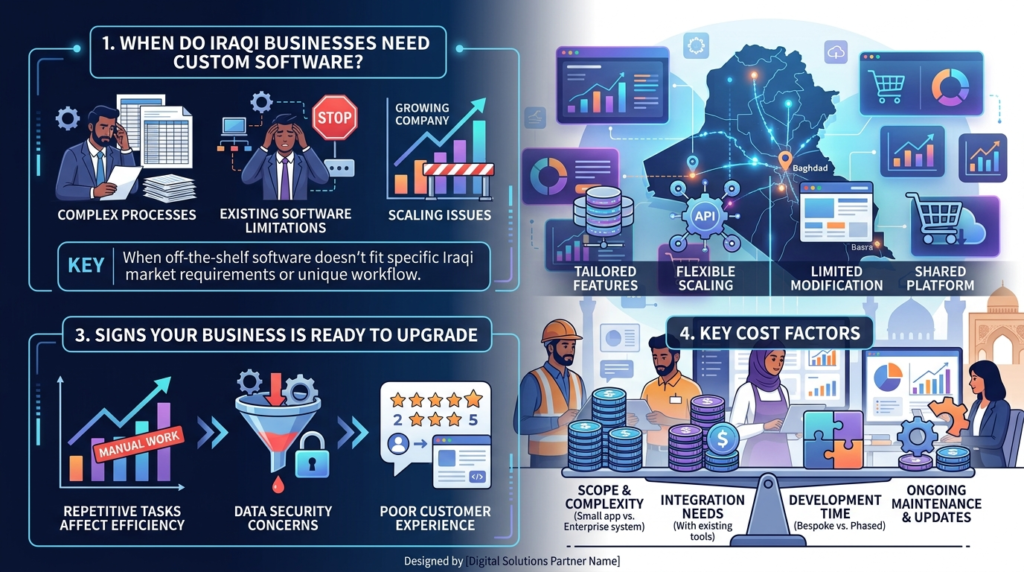
Cost Considerations
Why Web Applications Cost More Than Websites?
The additional planning, custom development, and testing that web applications require translates directly into higher cost than a standard website project, reflecting genuinely more complex work rather than arbitrary pricing. Comparing a web application quote directly against a website quote without accounting for this difference in scope leads to unrealistic expectations.
When the Investment Is Actually Worth It?
Custom software investment makes sense when the efficiency gained, or the specific business capability enabled, justifies the additional cost relative to continuing with manual processes or forcing a standard platform to handle something it wasn’t designed for. For a business genuinely losing time and money to inefficient manual workflows, a web application often pays for itself through operational efficiency rather than functioning purely as a cost center.
Avoiding Both Common Mistakes
Two opposite mistakes are equally common: paying for expensive custom software to solve a problem a standard website platform could have handled, and trying to force a website platform to perform genuine application-level functionality until it becomes an unmanageable patchwork of workarounds. Correctly identifying which category a project actually belongs to, before development begins, avoids both of these costly missteps.
Creative 4 All builds web application development projects for Iraqi businesses with genuine custom software needs, distinct from our broader web design and development work, so you get the right category of solution rather than a website stretched beyond what it can reasonably do.
Request a Free Audit to determine whether your specific need genuinely requires a custom web application, or whether a well-built website with the right tools would actually serve you better.
FAQs
If your need is primarily about presenting information and capturing inquiries, a website is the right fit. If it involves multi-step business logic, different user permission levels, or interconnected data that needs to update in real time, you likely need a web application.
Sometimes, but they’re often better kept separate — a marketing-focused website optimized for search visibility and lead generation, connected to a web application handling the more complex functional needs behind the scenes.
Meaningfully more, reflecting the additional planning, custom development, and testing required. The specific difference depends heavily on the application’s complexity, but budgeting expectations should account for a fundamentally different scope of work, not just a bigger website.
Yes, often more than a typical website. Web applications frequently continue evolving after launch as real usage reveals needed refinements, so budgeting for ongoing development, not just the initial build, is part of realistic planning.
A business needing a customer portal where clients log in to view personalized order history, request services with real-time availability checking, and receive automated status updates typically exceeds what a standard website platform can handle cleanly, making it a genuine web application use case.