
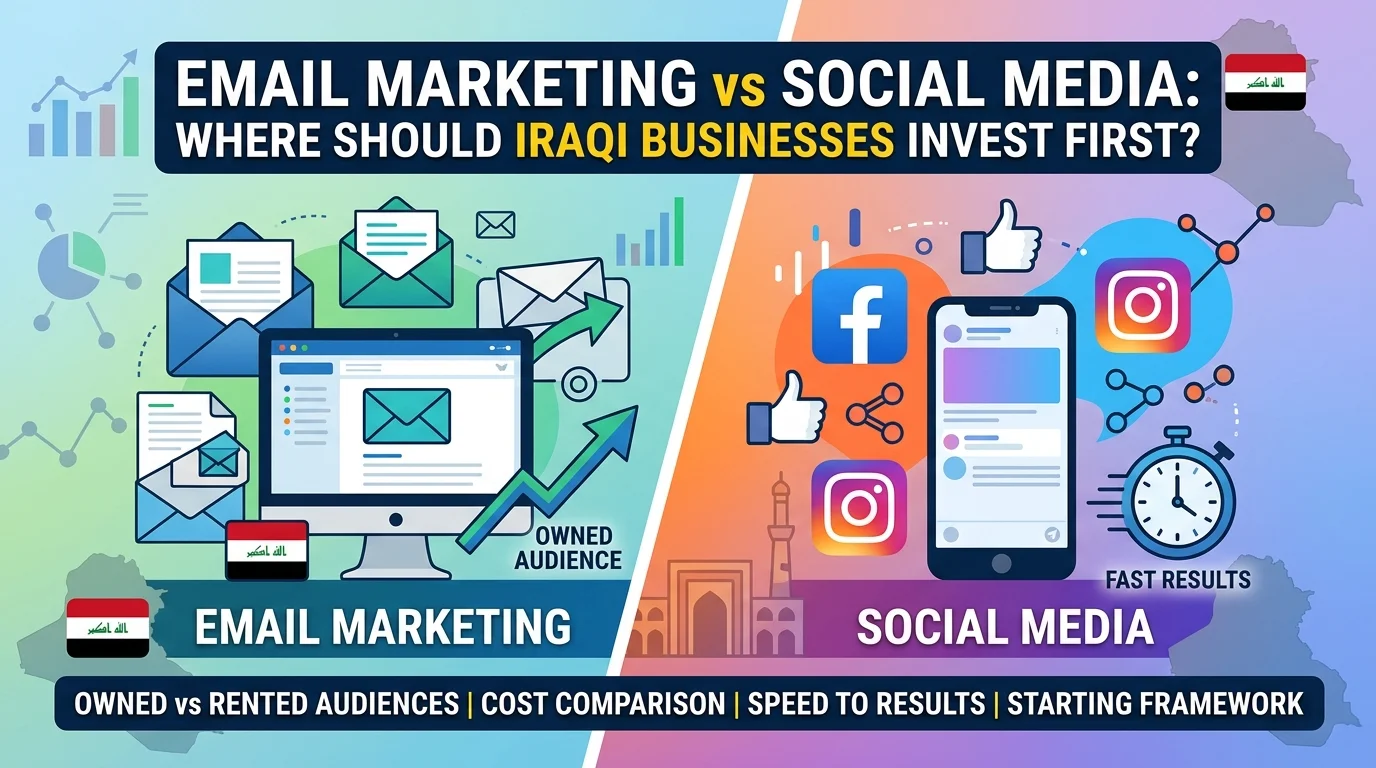
A founder with limited budget and even more limited time genuinely can’t do everything well at once, which makes email marketing vs social media a real, practical decision rather than an academic one — not a question of which channel is objectively superior, but which one makes sense to build first given your specific constraints right now.
This guide walks through the real difference between an owned audience and a rented one, an honest cost comparison between the two channels, how quickly each actually produces results, why the genuinely correct answer for most growing businesses eventually involves both rather than picking a permanent winner, and a simple framework for deciding where to start given your specific situation. If you’re a founder trying to decide where to put limited early resources, this guide is built to give you a genuinely useful answer rather than a generic “do everything” recommendation.
Owned vs Rented Audiences
What “Rented” Means for Social Media?
A social media following exists on infrastructure a business doesn’t control — a platform can change its algorithm, adjust what content gets shown to followers, or alter policies entirely, and a business has no real say in any of it despite having invested real time and effort building that audience.
What “Owned” Means for Email?
An email list is a direct asset a business controls — the contact information and relationship exist independently of any platform’s ongoing cooperation, meaning a policy change or algorithm shift at Meta or TikTok has no effect on a business’s ability to reach its own email subscribers.
Why This Distinction Genuinely Matters for Prioritization?
This isn’t a purely theoretical concern — platform algorithm changes have measurably reduced organic reach for many businesses relying entirely on social media, while a well-maintained list of genuine subscribers remains reachable regardless of what any single platform decides to change next.
A Practical Example of the Distinction in Action
Consider two Iraqi businesses launched around the same time: one invested exclusively in building a large Instagram following, the other split early effort between modest social media activity and genuine email list building. When a significant algorithm change later reduced organic reach across the platform, the first business saw its effective audience shrink substantially overnight, with no real recourse beyond increasing paid spend to compensate. The second business’s email list, smaller but genuinely owned, continued reaching its subscribers at the same rate it always had — not because the second business predicted the specific change, but because an owned channel simply isn’t exposed to that particular risk in the same way.
Cost Comparison
Why This Guide Won’t Quote Specific Numbers?
Both channels’ costs vary significantly based on scope, content volume, and whether paid promotion is involved, making a single comparative figure potentially misleading rather than genuinely useful for the wide range of Iraqi SMEs considering this decision.
Social Media’s Cost Structure
Social media can start with minimal direct cost for basic organic posting, but achieving meaningful reach increasingly requires paid promotion given how platform algorithms favor paid content, meaning the “free” entry point often becomes a genuine ongoing expense as a business tries to maintain visibility.
Email Marketing’s Cost Structure
Email marketing typically involves a platform subscription cost that scales with list size, but doesn’t require ongoing paid spend to reach existing subscribers the way social media increasingly does to reach existing followers — once someone subscribes, reaching them doesn’t require paying a platform for that specific delivery.
Speed to Results
Why Social Media Often Wins on Initial Speed?
Social media can generate visibility and engagement relatively quickly, especially with paid promotion, making it attractive for a business needing fast initial traction or wanting to test market response before committing to a longer-term strategy.
Why Email Takes Longer to Build Value?
Email marketing requires building a list before it can generate meaningful results, and this list-building process takes genuine time — there’s no equivalent to a viral social media post that can rapidly expand an email list the way one can expand social media reach.
The Tradeoff Between Speed and Durability
Social media’s faster initial speed comes with less durability given its rented-audience nature, while email’s slower build process produces a more durable, directly controlled asset once established — neither tradeoff is universally correct, but understanding it clearly helps match the choice to actual business needs.
Why the Best Answer Is Usually Both?
Different Roles in the Customer Journey
Social media often excels at discovery — introducing new potential customers to a business — while email excels at nurturing existing relationships and driving repeat business from people who already know the business, making the two channels complementary rather than competing for the same role.
Using Social Media to Build the Email List
A genuinely effective approach uses social media’s broader reach to attract new potential customers, then offers a clear reason to join an email list, converting some portion of that rented social audience into an owned, directly reachable one over time.
A Quick Prioritization Checklist
- Do you need fast initial visibility, or can you invest in a slower-building, more durable asset?
- Is your budget genuinely limited to one channel right now, or can you start building both simultaneously at a modest scale?
- Does your business model benefit more from new customer discovery (social media’s strength) or repeat business nurturing (email’s strength)?
- Could you use social media specifically to grow an email list rather than treating the two as separate, competing efforts?
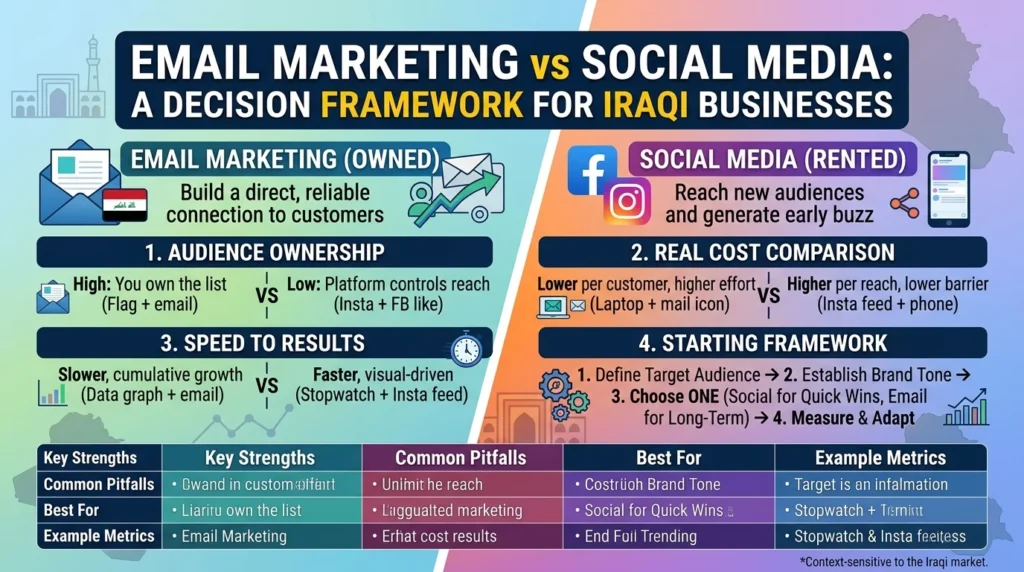
A Simple Starting Framework
For Genuinely Resource-Constrained Founders
A founder with truly limited time and budget for only one channel initially should consider which strength — discovery or nurturing — matters more for their specific business model right now, rather than defaulting to whichever channel feels more familiar or currently fashionable.
For Businesses With Slightly More Capacity
A business with modest but real capacity for both channels benefits from starting social media for discovery and visibility while simultaneously building email list collection into that process from day one, rather than treating email as something to address only after social media is fully established.
Revisiting the Decision as the Business Grows
This isn’t a permanent, one-time decision — as a business grows and resources expand, reassessing the balance between these two channels, and genuinely investing in both as complementary parts of one strategy, typically outperforms treating the initial choice as a fixed, long-term commitment.
Creative 4 All helps Iraqi SMEs build email marketing services and social media services as genuinely coordinated parts of one strategy, as part of comprehensive digital marketing in Iraq planning matched to your actual budget and business stage.
Read More on the Digital Marketing Blog — or subscribe for future insights on building a channel strategy that matches your specific business constraints.
FAQs
It depends on whether your business model benefits more from new customer discovery or nurturing existing relationships. Social media typically excels at the former; email at the latter — consider which matters more right now for your specific situation.
Yes, particularly if you use social media specifically to grow your email list from the start, rather than treating the two as entirely separate, competing investments requiring fully separate budgets.
Because platform algorithm changes and policy shifts can reduce how many followers actually see your content, without any input from your business — an email list doesn’t carry this same risk, since you control delivery directly.
Social media can generate visibility relatively quickly, especially with paid promotion, while email marketing requires building a list first, which takes longer but produces a more durable, directly controlled asset once established.
Most growing businesses eventually benefit from investing in both, since they serve different roles — social media for discovery, email for nurturing and repeat business — making a permanent either-or choice less effective than a coordinated approach over time.